
When you first log into a crypto exchange, the sheer number of flashing numbers and trading interfaces can be overwhelming. As you start trying to build your portfolio, you are immediately forced to make a choice: Spot or Futures.
Choosing the wrong market for your specific goals isn't just a minor mistake—it can be the difference between safely holding an asset for years or waking up to find your entire account liquidated.
While both markets involve predicting where the price of a digital asset is going, their mechanics, risks, and profit models are entirely different. Here is the Tapbit desk’s zero-jargon breakdown of Spot vs. Futures trading, and how to decide which sandbox you should be playing in.
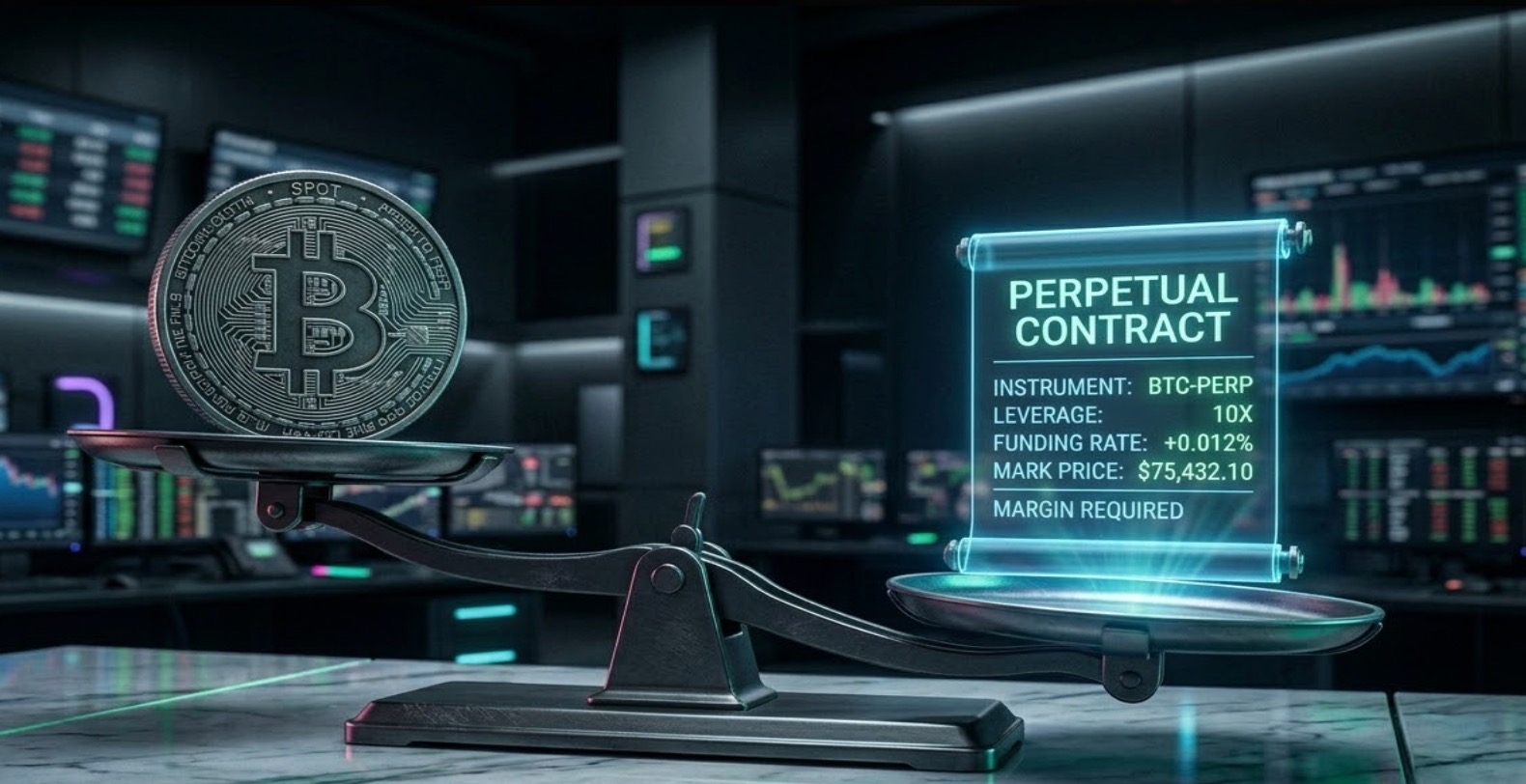
The Reality of Spot Trading: "If You Buy It, You Own It"
Spot trading is the most traditional, straightforward way to invest in cryptocurrency.
When you buy Bitcoin (BTC) on the Tapbit Spot market, you are buying the actual, underlying digital asset. The transaction settles "on the spot," and that Bitcoin goes directly into your exchange wallet.
-
The Profit Model (Unilateral): Spot trading is strictly a "buy low, sell high" game. You only make money if the price of the asset goes up. If the market crashes, your portfolio value drops, but you still own the exact same amount of coins.
-
The Use Case: Because you physically own the asset, you can withdraw it to a hardware wallet, use it to buy NFTs, or stake it in DeFi protocols.
-
The Risk Profile: Very low. Spot trading uses zero leverage. The only way you lose your entire investment is if the asset goes to absolute zero. There are no forced liquidations or margin calls.
The Double-Edged Sword of Futures: Speculation and Leverage
Futures trading (specifically Perpetual Contracts in crypto) is a completely different beast. You aren't buying physical coins. Instead, you are trading a contract that tracks the real-time price of an asset.
Why trade a contract instead of the real thing? Two reasons: Flexibility and Leverage.
-
The Profit Model (Bilateral): In the Futures market, you don't care if the market is pumping or crashing—you can make money in both directions. If you think the market is about to bleed, you can open a "Short" position and profit as the price drops.
-
The Power of Leverage: Tapbit Futures allows you to use margin (borrowed capital) to multiply your buying power. For example, with 10x leverage, you can control a $10,000 Bitcoin position using only $1,000 of your own money.
-
The Risk Profile: Extreme. Leverage multiplies your profits, but it equally multiplies your losses. If you are using high leverage and the market moves against you by just a small percentage, the exchange will forcibly close your position (liquidation) to cover the borrowed funds, and you lose your initial margin.
Spot vs. Futures: The Ultimate Cheat Sheet
If you are a visual learner, use this quick reference matrix to understand exactly how the two markets differ on Tapbit:
|
Feature |
Spot Market |
Futures Market (Perpetuals) |
|
Asset Ownership |
Yes. You own the actual coin. |
No. You own a contract tracking the price. |
|
Market Direction |
Long only. You need the price to go up. |
Long and Short. You can profit off market crashes. |
|
Buying Power |
1x. You trade exactly what you deposit. |
Up to 100x+. You can use leverage to borrow capital. |
|
Liquidation Risk |
None. You can hold through a 90% drop. |
High. A bad trade will wipe out your margin. |
|
Complexity |
Simple. Market and Limit orders. |
Advanced. Requires stop-losses, margin modes, and funding rates. |
|
Vibe |
"Buy it, forget about it, check it next year." |
"Staring at 15-minute charts and actively managing risk." |
Which Market Fits Your Profile?
There is no "better" trading method. The right choice depends entirely on your risk tolerance, your experience level, and how much time you want to spend staring at charts.
You Should Trade Spot If:
-
You are brand new to crypto and still learning how market cycles work.
-
You are an investor with a multi-year time horizon who just wants to safely accumulate blue-chip assets.
-
You want to move your assets off the exchange to use in Web3 applications.
-
You want to sleep peacefully at night without worrying about sudden market wicks liquidating your account.
You Should Trade Futures If:
-
You have a solid grasp of technical analysis and strict risk management rules.
-
You want to actively generate returns in a bear market by short-selling.
-
You have a smaller amount of capital and want to use calculated leverage to scale your returns.
-
You are an active day trader who plans to be in and out of the market within hours or days.
At the end of the day, professional traders usually use both. They keep the majority of their net worth in a safe, long-term Spot portfolio, and allocate a smaller, highly managed portion of their capital to the Futures market to aggressively trade short-term volatility.
Log in to Tapbit to explore our zero-fee Spot markets and deep-liquidity Perpetual Futures, or Register your free account today to start building your portfolio on a professional, institutional-grade engine.


