

SoFi Technologies is back in focus as investors prepare for the company’s second-quarter earnings report.
SOFI closed at approximately $16.88 on July 27, gaining 2.55% on trading volume of about 66.7 million shares. The company is scheduled to release its results before the US market opens on July 29, followed by a conference call at 8:00 a.m. Eastern Time.
The upcoming report arrives at an important point for SoFi. Its lending and financial services businesses are growing, membership continues to expand, and the company has introduced new products in artificial intelligence, investing and digital assets. At the same time, its technology platform has slowed, and the stock remains almost 50% below its 52-week high.
The question is not simply whether SoFi can beat quarterly expectations. Investors want to know whether the company can maintain rapid growth while improving profitability, managing credit risk and rebuilding momentum in its technology business.
Why Is SOFI Trending Now?
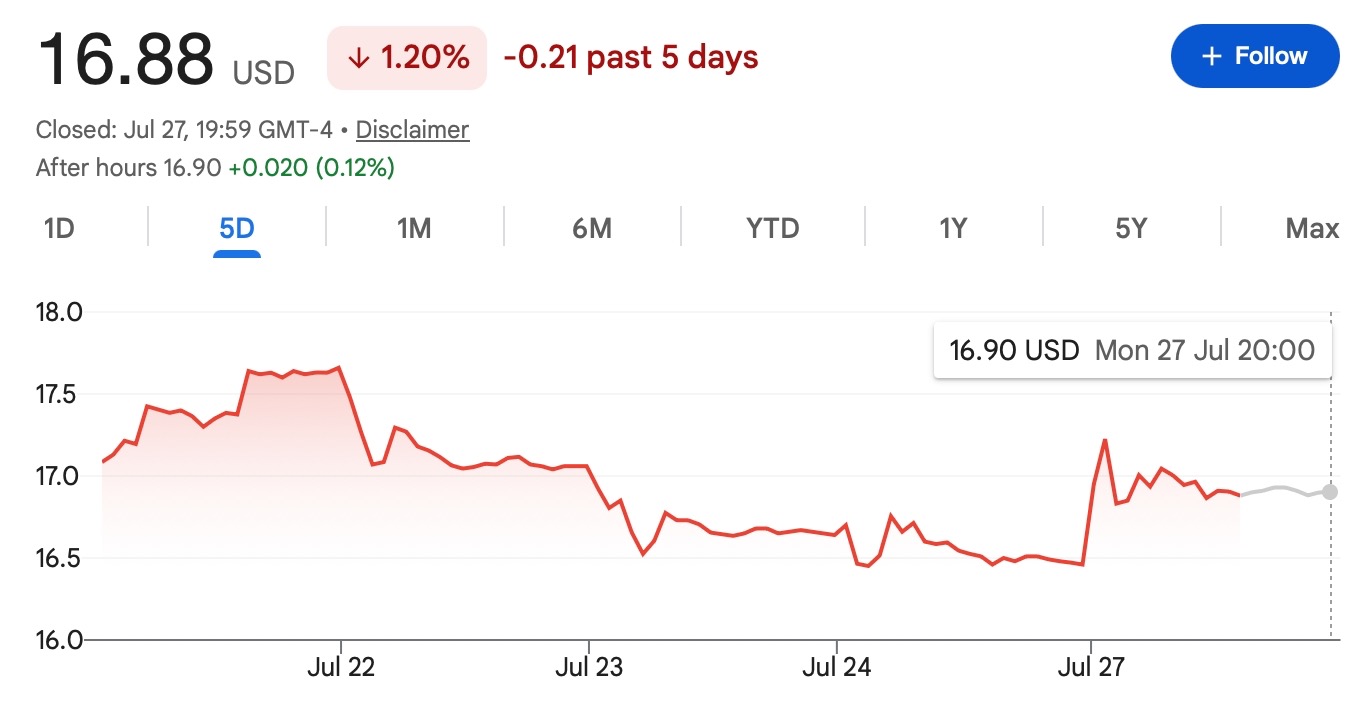
The immediate catalyst is the Q2 earnings report.
Third-party analyst estimates generally point to earnings of approximately $0.11 per share and revenue of around $1.11 billion to $1.14 billion. These figures are market expectations rather than company guidance, and the final reaction may depend more on SoFi’s full-year outlook than on the headline numbers.
The setup has created considerable interest among retail traders. SOFI is a relatively volatile stock, with a beta above two, and earnings announcements can produce large price movements in either direction.
The stock has recovered from its 52-week low of $14.92 but remains well below its 52-week high of $32.73. That leaves investors divided between a growth recovery thesis and concerns about valuation, credit conditions and business execution.
What Does SoFi Do?
SoFi began as a student loan refinancing company but has developed into a broader digital financial services platform.
Its consumer products now include personal loans, student loans, home loans, bank accounts, credit cards, investing, financial planning and cryptocurrency services. The company refers to customers who use its platform as members.
SoFi also operates a business-to-business technology division. Galileo provides payment-processing and financial infrastructure to fintech companies and other institutions, while Technisys provides digital banking technology.
The company reports through three main segments: Lending, Financial Services and Technology Platform.
This structure means SoFi is neither a traditional bank nor a pure software company. Its performance reflects lending demand, deposit growth, consumer activity, technology clients and the adoption of newer financial products.
Strong Q1 Results Set a High Bar
SoFi entered the second quarter after reporting record results for the first three months of 2026.
First-quarter total net revenue reached approximately $1.10 billion, up 43% from the previous year. Adjusted net revenue increased 41% to about $1.09 billion, while adjusted EBITDA rose 62% to approximately $340 million.
GAAP net income reached nearly $167 million, compared with about $71 million a year earlier. Diluted earnings per share doubled from $0.06 to $0.12.
Operating growth was equally strong:
-
Total members reached 14.7 million, up 35%
-
Products reached 22.2 million, up 39%
-
SoFi added approximately 1.1 million new members
-
Loan originations reached a record $12.2 billion
-
Deposits increased to approximately $40.2 billion
These figures established a demanding comparison for Q2. A modest earnings beat may not be enough if member growth, product adoption or forward guidance begins to slow.
Lending Remains SoFi’s Largest Engine

SoFi’s lending business delivered approximately $642 million in first-quarter net revenue, up 55% year over year.
Personal loans remained the largest category, while student and home loan originations also reached record levels. Demand has been supported by SoFi’s digital distribution, member base and access to lower-cost funding through customer deposits.
The Loan Platform Business is another important part of the story. SoFi can originate loans for third parties or refer borrowers to external partners, earning fees without retaining every loan on its own balance sheet.
This approach could allow the company to expand originations while using less capital. It also depends on continued demand from institutional buyers and funding partners.
In the Q2 report, investors will closely examine loan originations, interest income, net interest margin and the amount of fee revenue generated through third-party capital.
Credit Quality Could Shape the Market Reaction
SoFi primarily targets borrowers with relatively strong credit profiles, but personal loans remain unsecured. Their performance can deteriorate if unemployment rises, household finances weaken or borrowers become more stretched.
The most relevant Q2 indicators will include delinquency rates, charge-offs, loss provisions and management’s outlook for consumer credit.
Strong revenue growth accompanied by worsening credit quality may be viewed less favorably than slightly slower growth supported by stable borrower performance. For that reason, the earnings call may matter as much as the published EPS figure.
Financial Services Is Becoming More Important
SoFi’s Financial Services segment generated approximately $429 million in first-quarter net revenue, an increase of 41% from the previous year.
Products such as SoFi Money, Invest, Relay and the SoFi Credit Card are helping the company build deeper relationships with existing members. About 43% of new products in Q1 came from members who already used another SoFi service.
This cross-buying model is central to SoFi’s strategy. Acquiring a new customer can be expensive, but offering additional products to an existing member may reduce marketing costs and increase revenue per customer.
Financial Services products reached approximately 19.3 million at the end of Q1, representing most of the company’s total product growth.
The next report should show whether this momentum continued and whether higher product usage translated into stronger fee income, interchange revenue and deposits.
SoFiUSD Adds a Digital Asset Narrative
SoFi has also expanded into stablecoin infrastructure.
The company began minting SoFiUSD, a US dollar-reserved stablecoin issued through its national bank structure. It is developing settlement functions and connections between digital assets and traditional currencies.
SoFi has also discussed working with Mastercard to support stablecoin settlement across payment networks. This could eventually give SoFiUSD a role in payments and financial infrastructure rather than limiting it to cryptocurrency trading.
The project gives SOFI exposure to growing interest in regulated stablecoins. However, its current financial contribution has not been disclosed in enough detail to treat it as a major revenue driver.
For now, SoFiUSD is better understood as a developing product that may expand SoFi’s long-term addressable market.
Composer Brings AI Into Investing
In June, SoFi introduced Composer by SoFi after acquiring Composer Securities.
The platform allows users to describe an investment idea in everyday language, test the strategy using historical data and automate its execution. It is intended to make systematic investing tools more accessible to retail users who do not have programming experience.
Composer strengthens SoFi Invest’s product range and adds an AI-related narrative to the company. It may also increase engagement among investors who want more sophisticated tools than a basic brokerage account provides.
The key question is adoption. Product announcements can attract attention, but investors will eventually want evidence that Composer increases funded accounts, trading activity or fee revenue.
Technology Platform Is the Main Weak Spot
SoFi’s Technology Platform delivered a weaker first quarter. Segment revenue fell 27% year over year to approximately $75 million. Technology-enabled accounts declined 16% to about 133 million, partly because a large customer had completed its migration away from the platform.
Accounts increased from the previous quarter, suggesting some stabilization, but the segment has not yet returned to sustained growth.
This matters because Galileo and Technisys support SoFi’s identity as a financial technology infrastructure company. If the segment remains weak, investors may value SoFi more like a consumer lender and digital bank than a high-growth software platform.
Q2 Technology Platform revenue, account trends, contribution margins and new client wins will therefore be important parts of the report.
Key Risks for SOFI Stock
Credit performance remains one of the most important risks. A weaker consumer environment could increase delinquencies and charge-offs, particularly in unsecured personal loans.
Interest-rate movements can affect loan demand, deposit costs and net interest income. Lower rates may encourage borrowing but can also place pressure on margins.
Technology Platform weakness is another concern. Continued declines at Galileo or Technisys could challenge SoFi’s broader fintech valuation.
The company is also introducing several products at once, including SoFiUSD, Composer, AI financial tools and small business loans. These initiatives may require additional spending before they produce meaningful revenue.
Finally, expectations matter. SOFI can decline after reporting growth if the results or outlook fall short of what investors have already priced in.
Conclusion
SOFI is trending because its Q2 earnings report could clarify several competing narratives around the company.
The bullish case rests on rapid member growth, record loan originations, expanding financial services and improving profitability. SoFiUSD and Composer add new opportunities in stablecoins and AI-powered investing.
The more cautious view focuses on credit risk, the slowdown in Technology Platform revenue and a valuation that still requires sustained growth.
The upcoming report will show whether SoFi can maintain its momentum while strengthening the parts of the business that remain under pressure. For traders, guidance and credit quality may be more important than a narrow earnings beat.
Readers can follow global market developments and available trading products through Tapbit. Existing users can log in here, while new users can register for a Tapbit account. Product availability may vary by jurisdiction.
Frequently Asked Questions
What is SoFi Technologies?
SoFi Technologies is a digital financial services company offering loans, banking, investing, credit cards and cryptocurrency services. It also provides financial technology infrastructure through Galileo and Technisys.
Why is SOFI stock trending?
SOFI is attracting attention ahead of its second-quarter earnings report on July 29, 2026. Investors are watching member growth, loan demand, profitability, credit quality and the performance of its Technology Platform.
When will SoFi release its Q2 2026 results?
SoFi plans to publish its results at approximately 7:00 a.m. Eastern Time on July 29, followed by a conference call at 8:00 a.m.


