

Cerebras just put up numbers that would make any newly public AI company jealous. Cloud revenue nearly quadrupled. Guidance got a boost. Data center contracts hit 600+ megawatts.
And the stock? Got crushed after hours.
CBRS closed at $262.06, up 11.6% on the day. Then earnings came out — and it tanked 16.4% in extended trading, back to around $219.
This isn't about the tech being weak. It's the classic growth-stock trap: when everyone's already priced you for perfection, "pretty good" just isn't enough.
What Is Cerebras Systems?
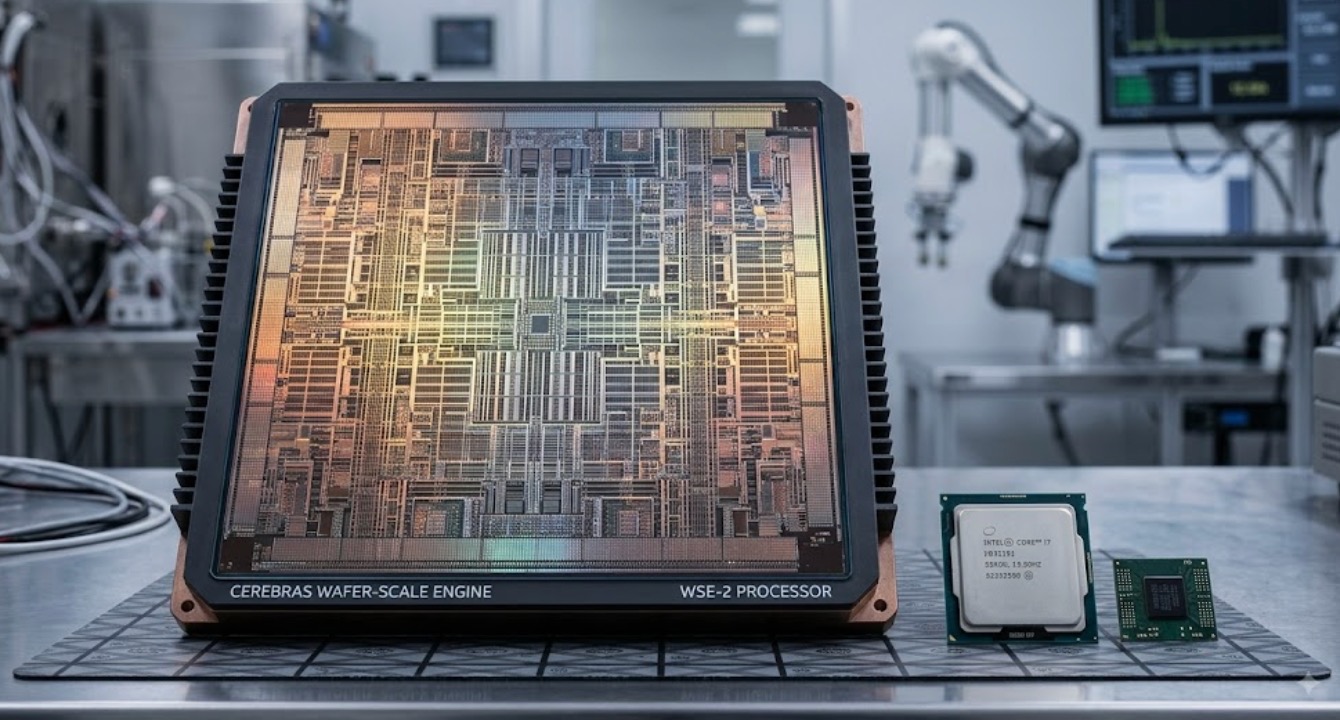
Cerebras Systems is an AI computing company that trades on Nasdaq under the ticker CBRS. Its shares began trading on May 14, 2026, following an initial public offering priced at $185 per share.
The company is best known for its Wafer-Scale Engine, a processor built around an entire silicon wafer rather than the smaller individual chips used in conventional GPU systems. Cerebras designed the architecture to handle demanding AI training and inference workloads with high processing speed.
Cerebras sells hardware systems, but its business is increasingly tied to cloud-based inference. Customers can access Cerebras computing capacity without purchasing and operating the hardware themselves.
That shift matters. Recurring cloud usage could eventually create a more predictable business than occasional hardware sales, although it also requires Cerebras to spend heavily on data centers, equipment and power.
Cerebras’ Cloud Business Is Growing Quickly
The strongest part of the second-quarter report was cloud revenue. Cerebras recorded $126 million in GAAP cloud and other services revenue, an increase of 281% from the same quarter a year earlier. Core cloud revenue reached $127.7 million, up 287%.
Cloud services also produced more revenue than hardware during the quarter. Hardware revenue fell to $54.1 million from $110.6 million in the first quarter, while cloud revenue increased from $82.8 million to $126 million.
This change helps explain why management describes AI inference as the company’s central growth opportunity. Businesses are looking for faster ways to run large language models, coding assistants and AI agents after those models have been trained. Cerebras is positioning its infrastructure as an alternative to conventional GPU-based inference.
Total core revenue reached $209.9 million, up 103% year over year and above the company’s previous guidance.
Why Did CBRS Stock Fall?
GAAP revenue was $180.1 million, up 74% from a year earlier but lower than the $193.4 million reported in the first quarter. Cerebras also reported a GAAP net loss of $450.5 million, or $2.98 per share.
Its GAAP gross margin fell to 14%, while the company’s core gross margin was 41%. The gap exists because Cerebras’ core figures exclude items including stock-based compensation, customer warrant amortization and certain data center costs.
Adjusted figures can help investors understand the performance of the underlying business. They do not make the excluded costs irrelevant. With Cerebras, the difference between GAAP and core results is large enough to deserve close attention.
Expectations also played a role. CBRS had gained roughly 45% over the previous month and rose another 11.6% on the day of the report. Investors entered earnings expecting strong numbers, leaving little room for a revenue mix or accounting result that required explanation.
The after-hours decline therefore appears to reflect several concerns at once: weaker GAAP revenue than some investors expected, a large reported loss, slower hardware sales and a valuation that assumes rapid future expansion.
Management Raised Its 2026 Outlook
The report was not weak across the board. Cerebras raised its full-year core revenue forecast from $855 million to $865 million to a new range of $880 million to $890 million. It also lifted its core gross margin outlook to between 41% and 43%.
For the third quarter, management expects core revenue of approximately $214 million to $216 million and a core gross margin between 38% and 40%.
The improved guidance suggests that management continues to see strong AI infrastructure demand. It also shows that the company expects cloud growth to offset some of the volatility in hardware sales.
Cerebras is still not forecasting core operating profitability. Its full-year core operating margin is expected to remain between negative 19% and negative 17%. Revenue growth is substantial, but the company is spending aggressively to build capacity ahead of future demand.
OpenAI Is Central to the Cerebras Story

Cerebras previously announced a multi-year agreement to provide OpenAI with 750 megawatts of computing capacity. The company values the agreement at more than $20 billion.
At the end of the second quarter, Cerebras reported $25.4 billion in remaining performance obligations. This figure represents contracted commitments that have not yet been recognized as revenue.
The size of that backlog gives Cerebras considerable revenue visibility. It also creates an execution test. The company must build or secure data center capacity, manufacture enough systems and deliver the contracted computing services on schedule.
OpenAI is therefore both an important customer and a source of concentration risk. A delay, contract change or deterioration in the relationship could have a material effect on Cerebras’ outlook.
The company identifies OpenAI, G42, Mohamed bin Zayed University of Artificial Intelligence and AWS among the significant customers on which its business depends.
AMD and AWS Expand the Inference Strategy
Cerebras is also working with AMD on a disaggregated inference architecture.
In a large language model, processing the initial prompt and generating the response have different computing requirements. The partnership is intended to assign these workloads to the hardware best suited to each task. Cerebras says the combined system could increase throughput by up to five times and is expected to enter production in the fourth quarter of 2026.
A similar approach is planned for Amazon Bedrock in the first quarter of 2027. Cerebras has also announced relationships with CrowdStrike, Lovable, Cognition, Figma, GSK and AlphaSense.
These partnerships broaden the company’s customer story beyond one large AI laboratory. The next question is how quickly they begin producing meaningful recurring revenue.
Capacity Is the Real Execution Test
Demand for AI computing is not enough if Cerebras cannot deliver the required infrastructure. The company says it now has more than 600 megawatts of data center capacity operating or under contract for delivery by the end of 2027. It plans to increase manufacturing capacity more than tenfold during 2026 and has secured additional wafer supply from TSMC.
Cerebras also argues that its architecture avoids several components facing industry shortages, including HBM memory and CoWoS packaging. That could give the company more flexibility as competing AI infrastructure providers fight for limited supply.
Even with these advantages, expansion remains expensive and operationally demanding. Data centers need suitable sites, power connections, cooling equipment and network infrastructure. Delays in any of these areas could postpone revenue recognition while costs continue to accumulate.
Cerebras finished the quarter with approximately $8.6 billion in cash, restricted cash and short-term investments, largely supported by its IPO and other financing. The balance sheet provides room to expand, but investors will want to see that spending translate into deployed capacity and customer revenue.
What the Market Will Watch Next
Cerebras has established that there is demand for its high-speed inference platform. Cloud revenue is growing rapidly, its customer list is expanding, and management has raised its annual forecast.
The next stage will be less about announcing demand and more about delivering against it.
Investors will watch whether cloud revenue continues to grow, whether core and GAAP margins begin to move closer together and whether Cerebras can bring its contracted data center capacity online without major delays. Progress with OpenAI, AWS and AMD will also help determine whether the company’s $25.4 billion backlog becomes a reliable source of revenue.
The post-earnings decline does not erase the company’s growth. It shows that CBRS is being valued against demanding expectations. For the stock to support that valuation, Cerebras will need to turn contracts, partnerships and planned capacity into consistent financial results.
Readers can follow global asset markets and access further market analysis through Tapbit. Existing users can log in, while new users can create an account.
Frequently Asked Questions
What is CBRS stock?
CBRS is the Nasdaq ticker for Cerebras Systems, an AI chip and computing infrastructure company. Cerebras began trading publicly on May 14, 2026, after pricing its IPO at $185 per share.
Why did CBRS stock fall after its second-quarter earnings?
CBRS fell approximately 16% in after-hours trading after the report. Investors focused on GAAP revenue of $180.1 million, a $450.5 million net loss and the large difference between GAAP and core results. The stock had also risen sharply before earnings, raising expectations.
Did Cerebras miss its revenue forecast?
Cerebras reported core revenue of $209.9 million, above its previous guidance of approximately $194 million. GAAP revenue was lower at $180.1 million. The different accounting treatments contributed to the mixed market reaction.


