What Are Memecoins
Memecoins are a category of cryptocurrencies shaped more by internet culture than by technical ambition. They usually originate from memes, viral jokes, or familiar online characters, and tend to spread through communities rather than product-driven adoption.
That difference matters. While assets like Bitcoin are often discussed in terms of security, scarcity, or network effects, memecoins move to a different rhythm. Their price action is frequently tied to attention—what people are talking about, sharing, or speculating on at a given moment.
In that sense, memecoins sit somewhere between financial instruments and cultural artifacts. They don’t always need deep utility to attract liquidity, but they do depend heavily on visibility and participation.
How Memecoins Became a Market Trend
Memecoins didn’t start as a serious segment of the crypto market. Early examples were closer to experiments—simple tokens built around humor that unexpectedly gained traction.
Dogecoin is still the clearest example of that shift. What began as a parody eventually turned into one of the most recognized digital assets, largely because its community kept it alive long after the joke should have faded.
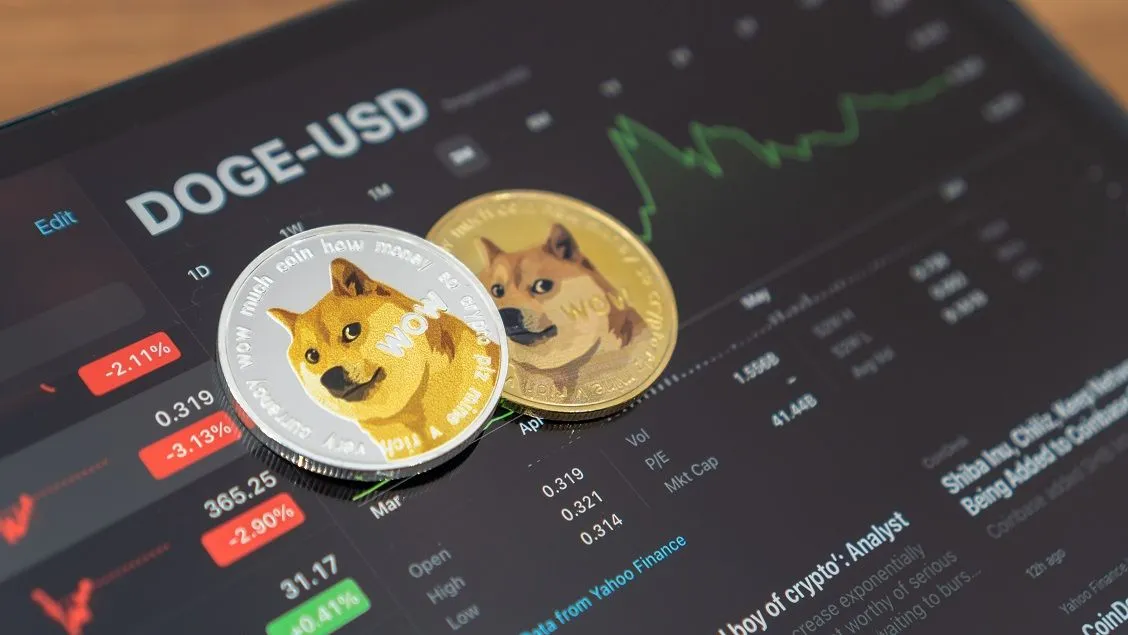
Since then, similar patterns have repeated. A meme gains momentum, a token appears, and attention quickly turns into trading activity. Sometimes the cycle lasts weeks. Occasionally, it sticks longer.
Over time, this dynamic has become familiar enough that memecoins now reappear in almost every market cycle, especially during periods of strong retail participation.
How Memecoins Work in Practice
From a technical perspective, memecoins are not particularly different from other tokens. Most are deployed on existing blockchains rather than building new infrastructure from scratch.
Networks like Ethereum or Solana are common choices, mainly because they already provide the tools needed to launch and trade tokens.
The mechanics are straightforward. A contract defines supply, transfers, and basic parameters. Once liquidity is added, the token becomes tradable, and price discovery begins.
What happens next, however, is less predictable. Some projects manage to build communities that sustain interest. Others fade quickly once attention shifts elsewhere. The difference is rarely technical—it’s usually narrative-driven.
The Role of Community and Narrative
If there is one consistent feature across memecoins, it is the importance of community.
Discussion threads, memes, short videos, and influencer posts often act as the main drivers of momentum. In many cases, they matter more than any roadmap or product update.
This also explains the volatility. When attention builds, liquidity follows. When it disappears, prices can drop just as quickly.
For traders, it creates a different kind of environment. Watching sentiment, tracking social activity, and reacting quickly can matter as much as understanding fundamentals—sometimes more.
Creating a Memecoin: Simple in Code, Hard in Reality
Launching a memecoin today is technically easy. Most major networks offer tools that allow users to deploy a token with minimal effort, often without writing code.
The barrier isn’t technical anymore—it’s relevance.
Coming up with a concept that people actually care about, building a recognizable identity, and maintaining engagement over time are far more difficult than deploying a contract. With so many tokens entering the market, most disappear before gaining any traction.
That saturation has changed expectations. Even for meme-based projects, clearer communication and some level of transparency are increasingly seen as necessary, not optional.
Buying Memecoins and Navigating the Market
For most participants, interacting with memecoins starts with trading rather than creation.
After setting up an exchange account and funding it, users typically move to spot markets where these assets are listed. Even then, the environment can feel very different from trading larger assets.
Liquidity varies widely, and price swings can be sharp. Many traders keep an eye on broader market activity—sometimes through major pairs like BTC/USDT—to get a sense of overall conditions before entering smaller, more volatile tokens.
Order types, fees, and execution speed also matter more than they might at first glance, especially when markets move quickly.
Risk, Speculation, and Reality
Memecoins are often described as high-risk, but that label doesn’t fully capture how they behave.
The risk isn’t just volatility. It’s also the lack of clear valuation frameworks. Without revenue models or defined utility, price becomes closely tied to sentiment—and sentiment can shift without warning.
That doesn’t mean memecoins are irrelevant. They offer insight into how retail attention moves through the market, and in some cases, they create short-term opportunities that more established assets don’t.
Still, participation tends to reward discipline. Position sizing, timing, and risk awareness matter more here than in many other parts of crypto.
Final Thoughts
Memecoins reflect a side of the crypto market that is easy to dismiss but hard to ignore. They show how quickly attention can translate into liquidity, and how narratives can shape market behavior in real time.
Some projects manage to outgrow their origins and build lasting communities. Many don’t. The difference often comes down to whether interest can be sustained beyond the initial burst of attention.
For anyone looking to explore this segment, the starting point is usually the same: understand how the market behaves, follow where attention is moving, and approach with a clear sense of risk.
If you want to take a closer look at how these assets trade in practice, you can explore available markets on the Tapbit platform and observe how liquidity and sentiment interact in real time.


