
Wormhole has become one of the better-known projects in blockchain interoperability. Its infrastructure connects multiple networks, supports cross-chain messaging and allows native assets to move across ecosystems.
The market recently refocused on Wormhole after the W token rose sharply amid renewed interest in its integration with Hyperliquid’s HYPE token.
The more important question, though, isn’t whether Wormhole can connect another asset. It’s whether growing protocol usage can create lasting demand for W.
Wormhole’s Recent Rally Has a Clear Catalyst
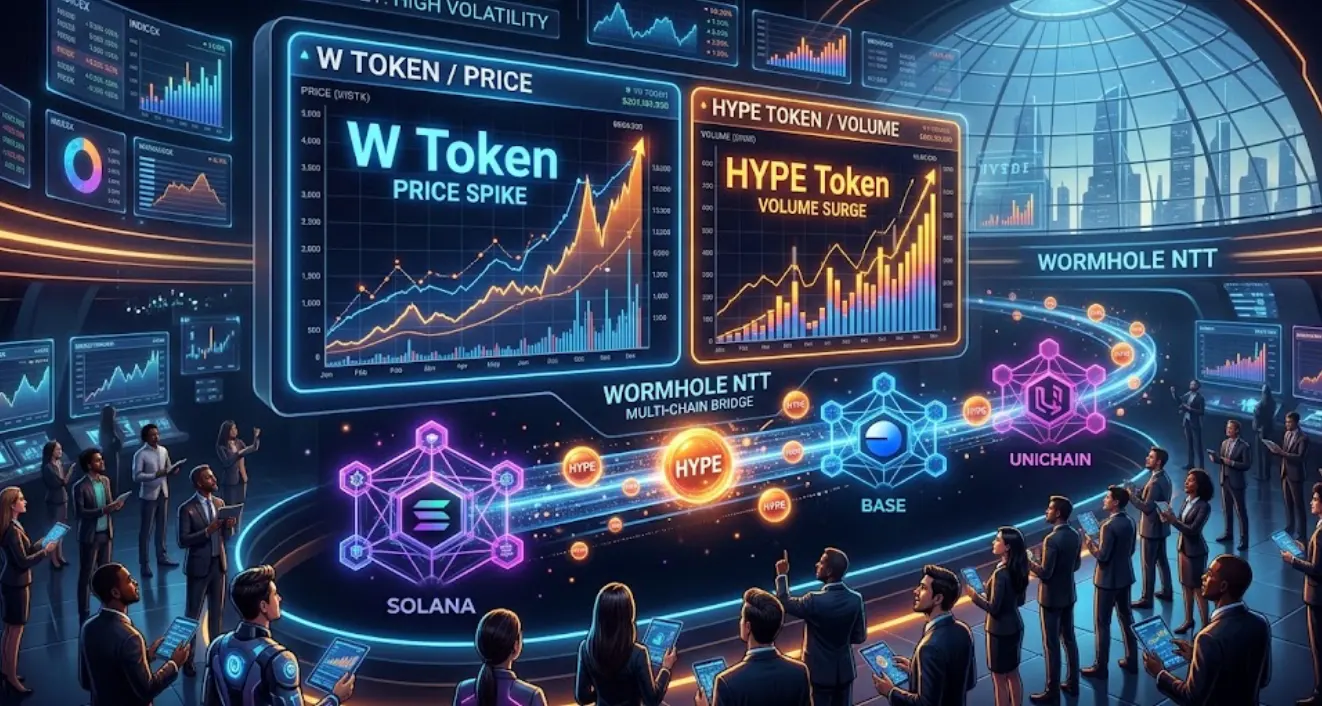
Wormhole’s latest move was linked to the expansion of HYPE across several networks through Wormhole’s Native Token Transfers framework. The integration allows HYPE to move beyond its original ecosystem and become available across networks including Solana, Base and Unichain.
That matters because Hyperliquid is one of the most closely watched trading ecosystems in crypto. Connecting HYPE to other chains gives Wormhole a visible use case at a time when traders are paying close attention to cross-chain liquidity.
The rally also came after a long period of weak performance. That made W more sensitive to new headlines. Once volume began to rise, momentum traders had a reason to revisit the token. The move was therefore driven by both a recognizable integration and a market looking for beaten-down assets with a fresh narrative.
Still, a successful integration does not automatically create long-term buying pressure for W. The network may process more activity while the token itself remains only indirectly connected to that activity.
Wormhole Is Moving Beyond Token Bridges

The larger story is the role Wormhole is trying to play in tokenized finance.
Wormhole has been selected as an interoperability provider for assets issued through Securitize, including BlackRock’s BUIDL fund and Apollo’s tokenized credit products. Its infrastructure is designed to help these assets operate across multiple blockchain networks rather than remain isolated on one chain.
The project has also supported the expansion of stablecoins such as RLUSD through its Native Token Transfers framework. This puts Wormhole close to several important market themes: real-world assets, institutional settlement, stablecoin liquidity and multichain distribution.
These developments give Wormhole a stronger business narrative than a simple bridge project. The difficulty is that infrastructure adoption and token value are not the same thing.
The W Token’s Value-Capture Problem
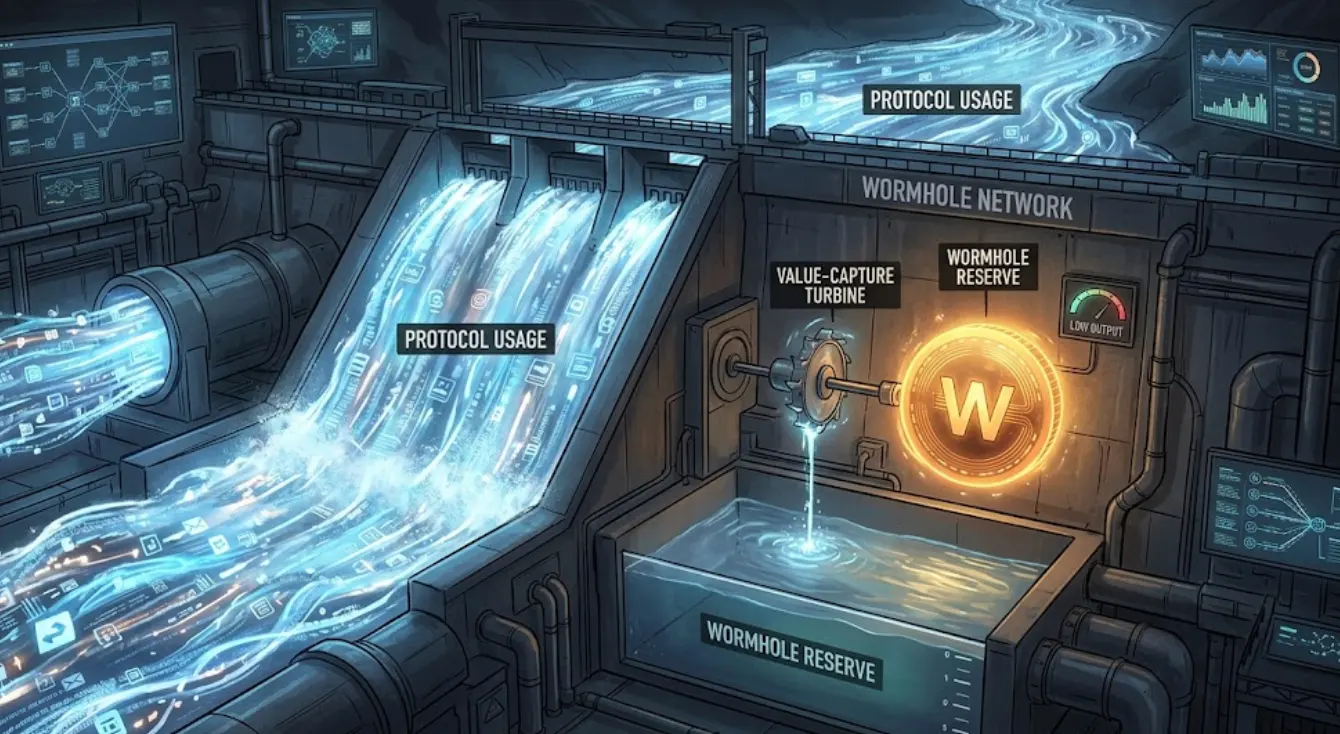
W is used for governance, staking and ecosystem incentives. Wormhole’s W 2.0 model also introduced the Wormhole Reserve and a plan to connect protocol value more closely with the token economy.
The official proposal included a targeted 4% base yield for eligible participants and a change from large annual unlocks to more frequent releases. Wormhole has described the Reserve as a mechanism that could accumulate value generated by the protocol, Portal and ecosystem applications.
That is an important change in direction, but it is still a framework rather than proof of strong token demand. The market needs to see whether protocol growth produces measurable value for W holders. More integrations may improve Wormhole’s infrastructure business without creating enough reasons for users to buy, hold or stake W.
This distinction is central to the investment case. A protocol can be widely used while its token remains under pressure if the token has weak economic links to that usage.
A Stronger Network Does Not Automatically Mean a Stronger Token

Wormhole’s infrastructure has continued to expand, but its network strategy also shows that not every chain remains a permanent part of the platform. In an August 2026 update, Wormhole said Berachain and Injective would undergo full deprecation, citing network activity, resource use and long-term sustainability considerations.
That decision is not necessarily negative. Removing low-activity or difficult-to-support networks can improve operational focus. It does, however, remind investors that interoperability is a competitive business. Wormhole must keep attracting developers, liquidity and institutional assets while maintaining security across the networks it supports.
The same principle applies to W. A growing list of integrations looks impressive, but the more useful measure is whether those integrations produce recurring activity and stronger token economics.
What Should Traders Watch Next?
The next important signal is whether HYPE is actually used across the connected networks in meaningful volume. A partnership announcement can create attention, but sustained transfers, liquidity and application activity would provide stronger evidence of adoption.
The reaction around the October 30 unlock will also matter. If W holds its gains while new supply enters circulation, the market may be absorbing the tokens without major difficulty. If the price weakens and volume disappears, the rally may prove to have been driven mainly by short-term positioning.
The broader question is whether Wormhole can turn its role in RWA and stablecoin infrastructure into a clearer economic connection with W. Until that happens, the token may continue to trade on a mixture of ecosystem announcements, market momentum and supply events.
W remains exposed to token unlocks, liquidity changes, cross-chain security risks, competition, market volatility and uncertainty over how successfully protocol activity will translate into token demand.
For readers tracking Wormhole, HYPE and the wider cross-chain market, Tapbit provides access to market data and crypto trading tools. Explore the market on Tapbit, log in to manage an existing account, or register to get started.
Frequently Asked Questions
What is Wormhole crypto?
Wormhole is a cross-chain interoperability protocol. It provides messaging, token transfer and other infrastructure for applications operating across multiple blockchain networks. W is the native token used for governance, staking and ecosystem-related functions.
Why did Wormhole’s W token rise?
The recent rally was associated with renewed attention around Wormhole’s integration of Hyperliquid’s HYPE token across additional blockchain networks. Higher trading volume and the token’s depressed prior price also helped attract momentum traders.
Does Wormhole’s RWA adoption automatically increase W demand?
No. RWA integrations demonstrate that institutions and asset issuers are using Wormhole’s infrastructure, but that does not automatically require users to buy or hold W. The connection between protocol usage and token value remains an important issue.


