

Stellar Lumens has caught attention again after a strong rebound pushed XLM back above $0.20.
As of August 22, XLM was trading near $0.21 — up roughly 30% over the previous seven days. Volume also rose sharply during the move. The rally followed an August 18 low near $0.15, putting the recovery at more than 30% in just a few days.
The price action is notable, but it's not tied to a single catalyst. XLM has benefited from a broader crypto rally, renewed interest in payment-focused tokens, and several Stellar-specific factors — including rising real-world asset activity, a new institutional fund distribution initiative, and the upcoming Protocol 28 upgrade.
What matters now is whether any of these developments can translate into lasting demand for the Stellar network and its native asset.
Why Is XLM Rising Now?
The immediate explanation begins with the wider market. Bitcoin briefly moved above $79,000 during its strongest weekly advance in two years, while XRP gained close to 40%. Other large-cap altcoins also recorded double-digit increases, indicating that the rally was not limited to Stellar. The Block described the move as a broad market advance supported by renewed spot demand, improving liquidity expectations and short-position liquidations.
XLM often trades alongside XRP because both assets are associated with payments and cross-border settlement. The two networks are separate projects, but traders frequently group them within the same market narrative.
When XRP moves sharply, capital can rotate into XLM as traders search for related assets that have not yet matched the leader’s performance. That makes the recent XLM move partly a catch-up trade rather than a reaction to a single Stellar-specific event.
This distinction matters. A market-led rally can lift prices quickly, but its durability still depends on Bitcoin, XRP and overall risk appetite.
Stellar’s RWA Business Is Growing
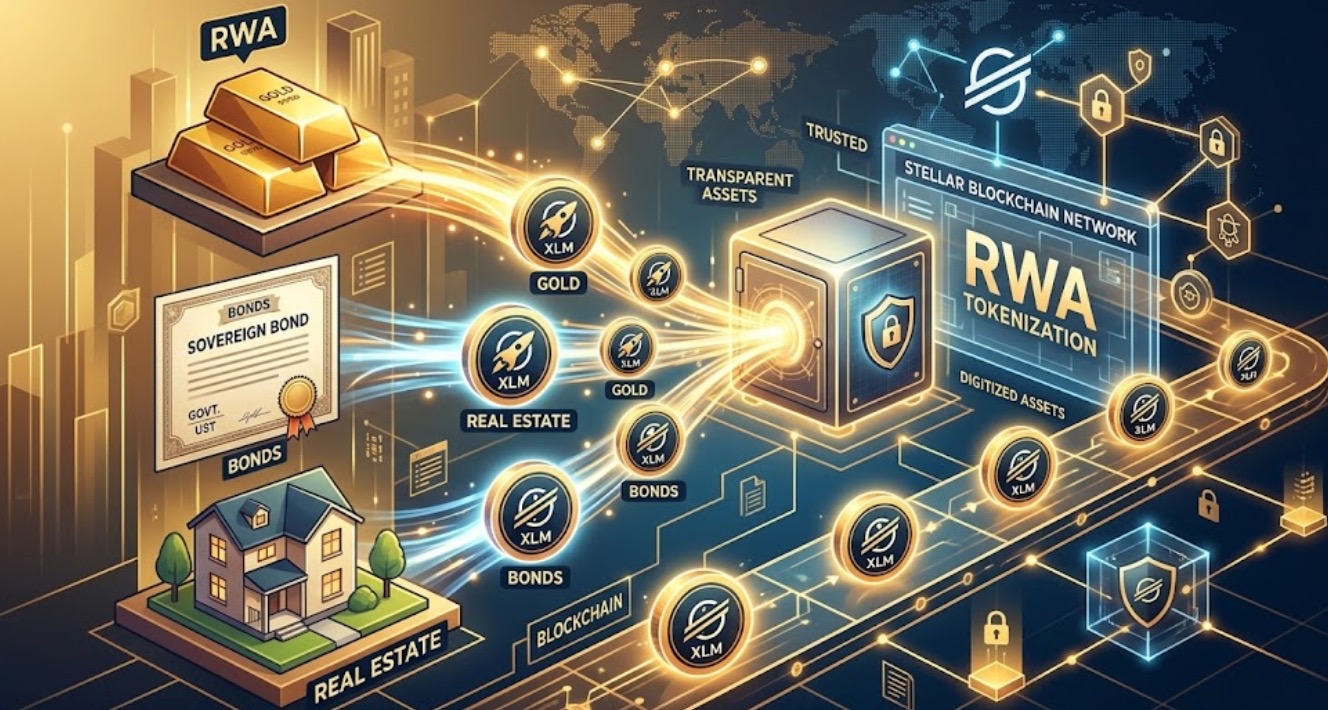
The Stellar Development Foundation reported that the value of real-world assets on the network crossed $3 billion in June 2026. According to its Q2 2026 report, that figure had risen from $1 billion in January and $2 billion in April.
Those assets reportedly include tokenized government securities, money market funds, private credit products and gold-backed instruments. Stablecoin transfer volume on Stellar reached $11.4 billion during the second quarter, representing a 72% increase from the previous quarter.
Stellar also reported more than 10.7 million active accounts and 2,968 monthly active developers as of June 30. They show why Stellar has become increasingly visible in the tokenization discussion.
The network is not trying to compete solely through speculative applications. Its position is built around payments, regulated asset issuance and financial distribution, areas that have gained importance as banks and asset managers explore public blockchain infrastructure.
Marketnode and BNY Investments Add an Institutional Catalyst
A more recent development arrived on August 13, when Marketnode announced plans to offer on-chain access to selected BNY Investments funds through Stellar.
Marketnode said it would issue tokens representing selected funds for institutional and accredited investors in the Asia-Pacific region. The arrangement combines BNY Investments’ fund products, Marketnode’s distribution infrastructure and Stellar’s blockchain network.
The official Marketnode announcement did not disclose the fund names, expected tokenized value or a precise launch date. It is therefore too early to measure the initiative’s effect on Stellar’s transaction volume or XLM demand.
Still, the partnership is relevant because it moves Stellar’s RWA narrative beyond general industry interest. It provides another example of established financial institutions examining blockchain-based distribution for regulated investment products.
What matters next is execution: which funds become available, when investors can access them and whether those products generate recurring on-chain activity.
Protocol 28 Is the Next Technical Milestone
The upgrade is mainly designed for developers rather than token holders. It introduces changes intended to improve consensus performance under load and make Soroban smart contracts easier to maintain.
One part of the upgrade allows groups of related contracts to be updated through a shared reference. Another introduces more flexible tools for migrating contract data when an application changes its structure. The consensus update is designed to reduce delays caused by slow or invalid transaction sets.
The testnet upgrade is scheduled for August 27, followed by a mainnet upgrade vote on September 16. So Protocol 28 is not yet active on mainnet. Traders should therefore treat it as an upcoming technical event, not a completed improvement.
The upgrade is unlikely to create immediate demand for XLM on its own. Its value will depend on whether better development and upgrade tools help Stellar attract applications that produce sustained transactions, liquidity and user activity.
Network Growth Does Not Automatically Mean XLM Demand
Stellar’s growth figures make a stronger case for the network, but the relationship between network adoption and XLM’s price is not straightforward.
XLM is used to pay transaction fees and meet account reserve requirements. It can also serve as a bridge asset within Stellar’s built-in exchange and payment-routing system.
However, transactions involving stablecoins or tokenized funds do not always require users to hold large amounts of XLM. Stellar’s fees are deliberately low, which improves its usefulness as payment infrastructure but limits how much direct token demand each transaction creates.
This creates an important distinction between the Stellar network and the XLM asset.
A rising volume of tokenized assets may strengthen Stellar’s position in financial infrastructure without producing an equal increase in XLM buying. For the token to benefit over time, the ecosystem needs growth that also expands liquidity, reserves, decentralized trading and application-level demand.
RWA totals alone cannot answer that question.
Can XLM Hold Above $0.20?
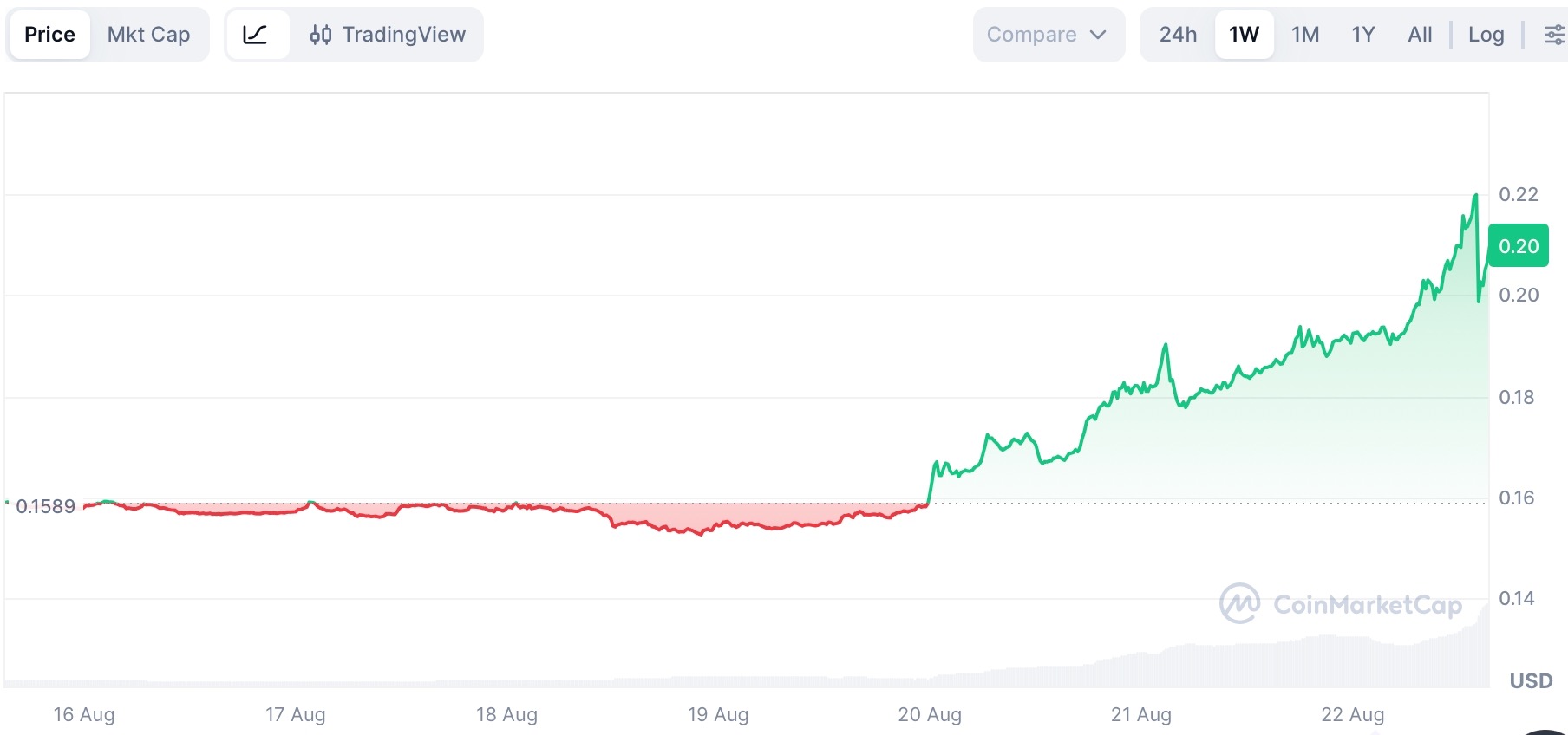
The recent move has returned XLM to a price area that previously acted as resistance. CoinLore data showed short-term support near $0.20 and resistance around $0.23 as of August 22. These levels are not fixed forecasts, but they provide context for the current market structure.
Holding above $0.20 would suggest that buyers are willing to defend the breakout area. A sustained move above approximately $0.23, supported by trading volume, would provide stronger evidence that the rebound is developing beyond a short squeeze or temporary catch-up trade.
A fall back below $0.20 would weaken that setup. If Bitcoin or XRP reverses sharply, XLM could also lose part of its recent gain even without any change in Stellar’s underlying development.
Crypto markets can reprice faster than network fundamentals change, particularly after a move of more than 30% in a few days.
What Matters Next for Stellar
XLM’s rebound rests on two different stories.
The short-term story is market-driven. Bitcoin’s advance, XRP’s outperformance and a broader return of risk appetite created favorable conditions for XLM to recover from its August low.
The longer-term story is about whether Stellar can become widely used infrastructure for payments and tokenized assets. Its reported RWA growth, stablecoin volume and institutional relationships give that argument substance. Protocol 28 could also improve the experience of developers building financial applications on the network.
Neither story guarantees that XLM will continue rising.
The signals worth following are practical: whether XLM holds the recent breakout area, whether volume remains elevated, whether Marketnode launches its tokenized fund products and whether Protocol 28 reaches mainnet on schedule. Growth in recurring smart-contract activity and XLM-based liquidity would provide stronger evidence of token demand than partnership headlines alone.
Readers can follow crypto market developments and educational research through Tapbit. Existing users can log in here, while new users can create an account.
Frequently Asked Questions
Why is Stellar (XLM) rising?
XLM’s latest rally appears to reflect several factors rather than one announcement. The wider crypto market has strengthened, XRP has outperformed, and traders have renewed their attention on payment-focused assets. Stellar’s growing real-world asset activity and upcoming Protocol 28 upgrade have also supported interest in the project.
What is Stellar (XLM)?
Stellar is a public blockchain designed for payments, asset issuance and cross-border settlement. XLM is its native asset and is used for transaction fees, account reserves and certain liquidity functions within the network.
Is XLM connected to XRP?
XLM and XRP are separate assets operating on different networks. However, traders often associate them because both projects focus on payments and financial settlement. Strong XRP performance can sometimes draw attention to XLM as a related market trade.


