Tokenized stocks are starting to feel less like an experiment and more like a market category investors need to understand. T-Mobile US Tokenized Stock (Ondo), also known as TMUSON, is one of the products sitting at the center of that shift.
At first glance, TMUSON looks like another crypto asset listed on a price page. But that would be the wrong way to read it. This is not a meme coin, not a governance token, and not a Layer 1 asset trying to build its own ecosystem. It is a tokenized product designed to give eligible users economic exposure linked to T-Mobile US stock.
That makes TMUSON more interesting than a normal listing story — but also more complicated.
TMUSON is stock exposure in token form
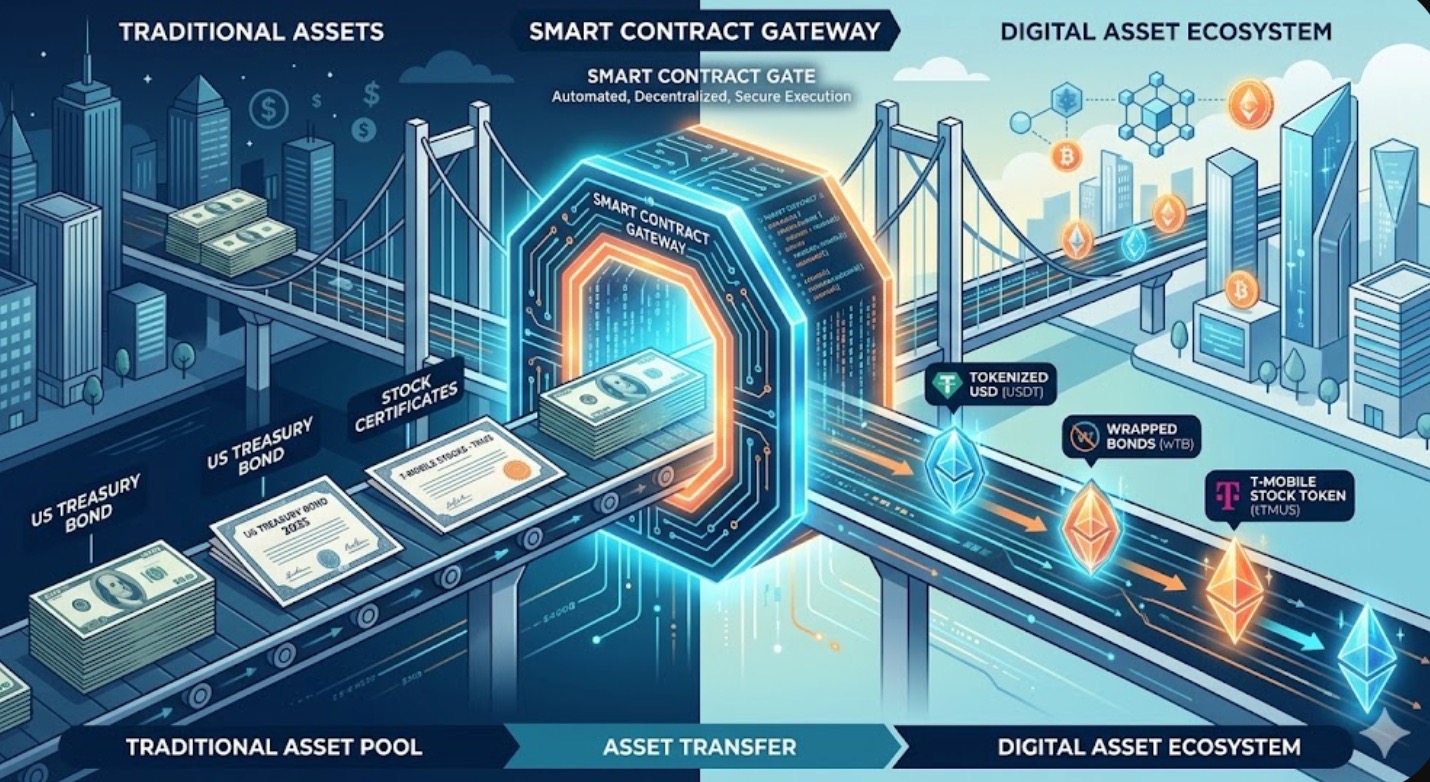
The basic idea behind TMUSON is simple: take the economic exposure of T-Mobile US stock and make it available through blockchain-based infrastructure.
Ondo describes its tokenized stock products as instruments that are designed to track the return of the underlying asset, including the effect of dividend reinvestment after applicable tax withholding. In practical terms, TMUSON is meant to behave more like a stock-linked product than a crypto-native token.
That distinction is important. When investors look at Bitcoin, Ethereum, or a DeFi token, they usually think about network activity, protocol revenue, token supply, user growth, or market sentiment. With TMUSON, the starting point is different. The first thing to understand is T-Mobile’s stock performance. The second thing is how the token structure works.
The token is the wrapper. The underlying exposure is the story.
Why tokenized equities are becoming relevant
The rise of TMUSON is part of a much broader trend: real-world assets moving on chain.
Stablecoins brought dollars into crypto markets. Tokenized Treasuries brought yield-bearing traditional assets into blockchain infrastructure. Tokenized equities are the next step in that same direction. They aim to give users access to familiar stock and ETF exposure without forcing them to leave the digital asset environment completely.
For crypto-native users, that is the appeal. A tokenized stock can sit alongside stablecoins, crypto assets, and other onchain positions. It may also make fractional access and portfolio management more flexible.
But the convenience can be misleading. A tokenized equity is still tied to securities rules, issuer structures, custody arrangements, and jurisdictional restrictions. It may trade like a token, but it should not be treated like a simple spot crypto asset.
How TMUSON works
TMUSON is issued through Ondo’s tokenized asset framework. The product is designed to represent economic exposure to T-Mobile US stock, not direct ownership of the stock itself.
This is the point investors should not skip.
Holding TMUSON is not the same as holding T-Mobile shares through a traditional brokerage account. Tokenholders do not receive the full set of shareholder rights that normally come with direct stock ownership, such as voting rights or traditional shareholder information rights. Instead, they hold a tokenized instrument that is structured to track the economic value of the underlying exposure.
That does not make the product bad. It just means investors need to understand what they actually own.
TMUSON is closer to a tokenized financial instrument than a stock certificate. The value proposition is access, flexibility, and blockchain-based settlement — not shareholder control.
Access is not universal
One of the biggest misunderstandings around tokenized stocks is the idea that they are simply “global stocks for everyone.” That is not how these products work.
Tokenized securities are heavily shaped by regulation. Access depends on the user’s jurisdiction, eligibility, platform rules, KYC requirements, and local law. Ondo’s documentation makes clear that its tokenized stock products are subject to restrictions, and U.S. persons are generally not eligible to buy or redeem them through Ondo’s structure.
That matters for anyone writing about or trading these products. TMUSON should not be presented as a shortcut to unrestricted U.S. stock access. It is a regulated, eligibility-based product category.
Market data: the headline price is not enough
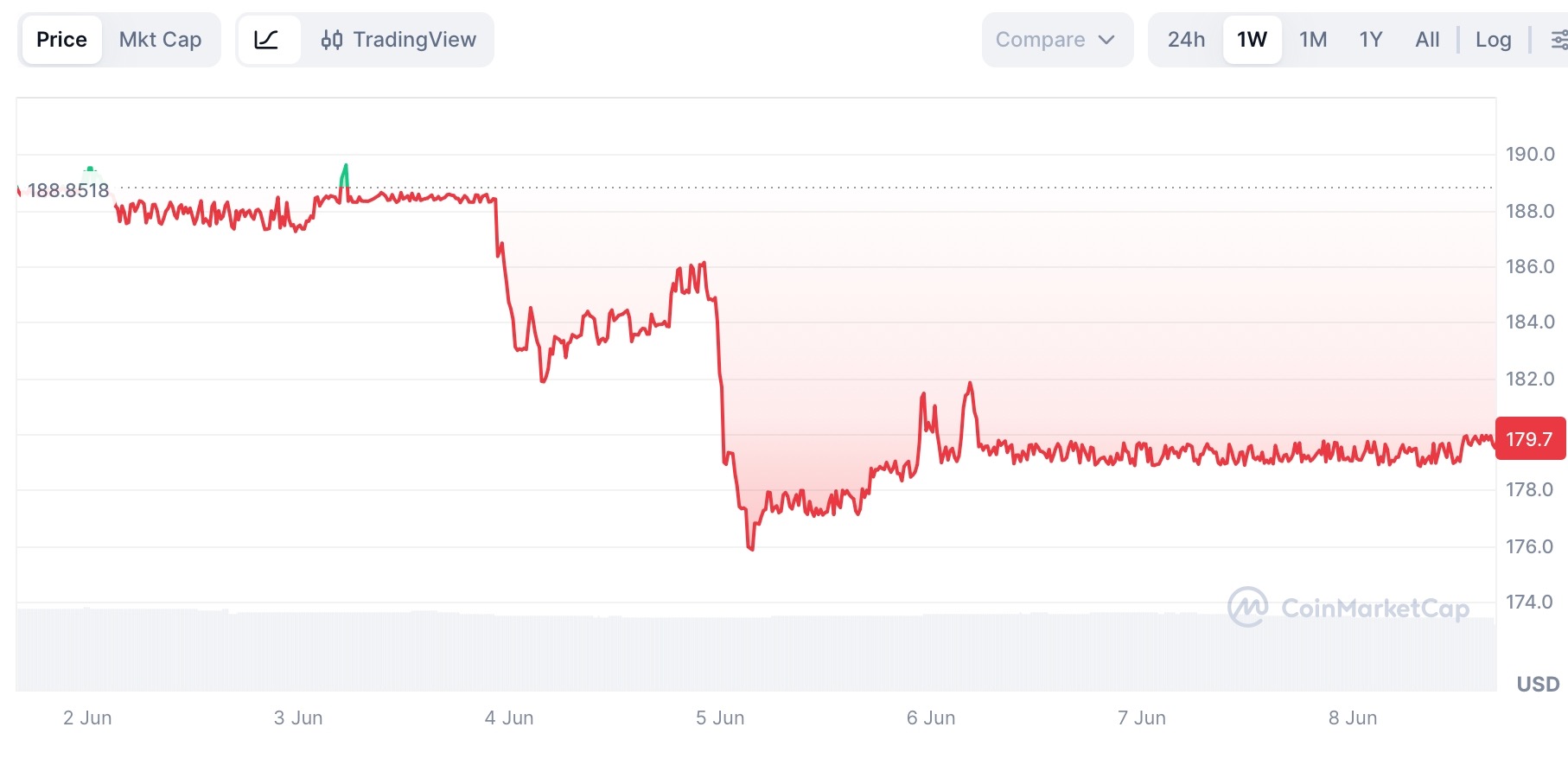
At the time of writing, CoinMarketCap showed TMUSON trading around $179, with 24-hour trading volume above $750,000. Reported circulating supply was around 158.85 TMUSON, with a market capitalization of roughly $28,000.
Those numbers need context. The token price may sit close to T-Mobile’s stock price, but the token market itself is still very small. A low circulating supply and thin market cap can make trading conditions very different from buying or selling the underlying stock directly.
For investors, that means the headline price is only one part of the picture. Order book depth, bid-ask spread, platform availability, redemption mechanics, and secondary-market liquidity all matter. A tokenized stock may track an underlying equity in theory, but execution quality still depends on the market where the token trades.
What can TMUSON be used for?
TMUSON is mainly useful for investors who want stock-linked exposure inside a crypto environment.
A trader may use it to gain exposure to T-Mobile US without moving fully back into traditional brokerage rails. A portfolio manager focused on digital assets may view it as part of a broader RWA allocation. A user already holding stablecoins and crypto assets may see tokenized stocks as a way to diversify into equity-linked exposure.
But TMUSON is not designed for payments, governance, gas fees, or protocol participation. Its role is financial exposure.
That also changes how investors should evaluate it. The question is not whether TMUSON can build a large community or create viral demand. The more relevant questions are: how does T-Mobile perform, how closely does the token track the exposure, how liquid is the market, and how reliable is the product structure?
The risks are different from normal crypto risks
TMUSON carries stock-market risk because its exposure is linked to T-Mobile US. If the underlying equity weakens, the tokenized product may also come under pressure.
It also carries liquidity risk. The underlying stock may be liquid, but that does not automatically mean the token market has the same depth.
Then there is structure risk. Investors rely on the issuer, the legal framework, custody arrangements, backing model, and redemption process. These are not details to ignore. They are central to how tokenized securities function.
Regulatory risk is another major factor. Tokenized equities sit between crypto markets and traditional securities markets, which means access and transferability may change depending on local rules and platform requirements.
The final risk is probably the most common one: misunderstanding the product. TMUSON may appear next to crypto tokens on a market page, but it should not be analyzed like a meme coin or early-stage altcoin. The asset is tied to equity exposure, and that is where the investment logic begins.
Tapbit View
TMUSON matters because it shows where the RWA market is heading. Tokenized equities are no longer just a concept discussed in industry reports. They are becoming tradable products with real market data, real users, and real limitations.
The opportunity is clear. Tokenized stocks can make traditional market exposure more flexible for certain users and may eventually become an important part of onchain portfolio construction.
But the category is still early. Investors should not confuse tokenized exposure with direct ownership, and they should not assume that a familiar stock name removes the risks of token structure, liquidity, eligibility, or regulation.
TMUSON is best understood as a bridge product. It connects traditional equity exposure with crypto market infrastructure. Bridges can be useful, but only when users understand what is on both sides.
Traders can follow more market updates on Tapbit, log in, or register to stay connected with global crypto opportunities.
Frequently Asked Questions (FAQ)
What is TMUSON in simple terms?
TMUSON is a tokenized product linked to T-Mobile US stock. It is designed to give eligible users economic exposure to T-Mobile’s stock performance through blockchain-based infrastructure. It is not a normal crypto token with its own network or utility economy.
Is TMUSON the same as buying T-Mobile stock?
No. This is the most important distinction. Buying TMUSON is not the same as holding T-Mobile shares in a brokerage account. TMUSON is designed to track the economic exposure of the stock, but holders do not receive the full rights of direct shareholders, such as voting rights.
Why would someone use a tokenized stock instead of a traditional brokerage account?
For some crypto-native users, the appeal is convenience. A tokenized stock can sit alongside stablecoins and other digital assets, making portfolio management easier within a blockchain-based environment. It may also offer more flexible access for eligible non-U.S. users, depending on platform rules and local regulations.


