
Perpetual DEXs are back in the spotlight as traders look beyond spot tokens and focus again on leverage, liquidity, open interest and on-chain derivatives.
The latest attention is not coming from one token alone. Hyperliquid remains the clear leader by open interest, Lighter is gaining visibility through its Robinhood Wallet integration, and Aster continues to compete with broad market coverage and aggressive trading incentives.
For futures traders, this matters because perp DEXs are no longer just small DeFi experiments. They are becoming serious venues for crypto, commodities, stock-linked markets and real-world asset perpetuals.
For market users following fast-moving trading narratives, Tapbit provides access to crypto market tools and opportunities across major digital asset themes.
What Is a Perp DEX?
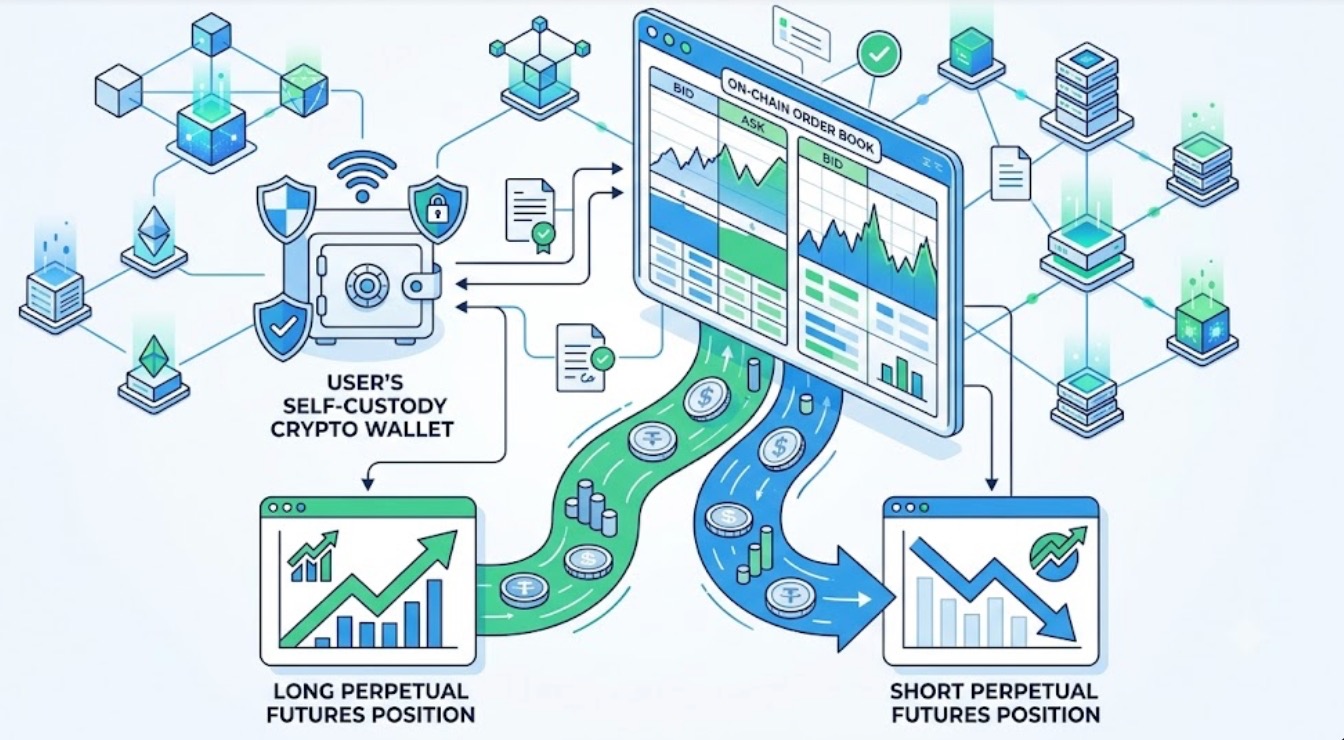
A perp DEX is a decentralized exchange for perpetual futures. Perpetual futures allow traders to go long or short without owning the underlying asset. Unlike traditional futures, they do not expire on a fixed date. Instead, funding rates help keep the contract price close to the underlying market price.
A perp DEX brings that model on-chain. Users can trade from self-custody wallets, settle positions in stablecoins and access leverage without relying fully on a centralized exchange account.
The appeal is clear: speed, transparency, global access and on-chain settlement. But the risks are just as real. Perpetual futures use leverage, and leverage can amplify both gains and losses.
Why Perp DEXs Are Heating Up Again
Perp DEXs are gaining attention for three main reasons.
First, open interest is growing. Open interest shows how much capital is sitting in active futures positions. When open interest rises, it usually means traders are putting more risk into the market.
Second, product coverage is expanding. Perp DEXs are no longer limited to Bitcoin, Ethereum and a few large altcoins. Some platforms now support stock-linked perps, commodity perps, forex markets, indices and pre-IPO-style markets.
Third, traditional finance and crypto are getting closer. Tokenized stocks, Robinhood Chain, RWA perps and on-chain settlement are all pulling the market toward a new question: can decentralized derivatives become part of mainstream trading infrastructure?
That is the real reason this sector is worth watching.
Hyperliquid Still Leads the Perp DEX Market
Hyperliquid remains the main name in the perp DEX race.
According to PerpScope data reviewed on July 20, 2026, Hyperliquid held around $9.02 billion in open interest, representing more than half of tracked perp DEX open interest. Aster and Lighter followed behind, but Hyperliquid still had the largest share by a wide margin.
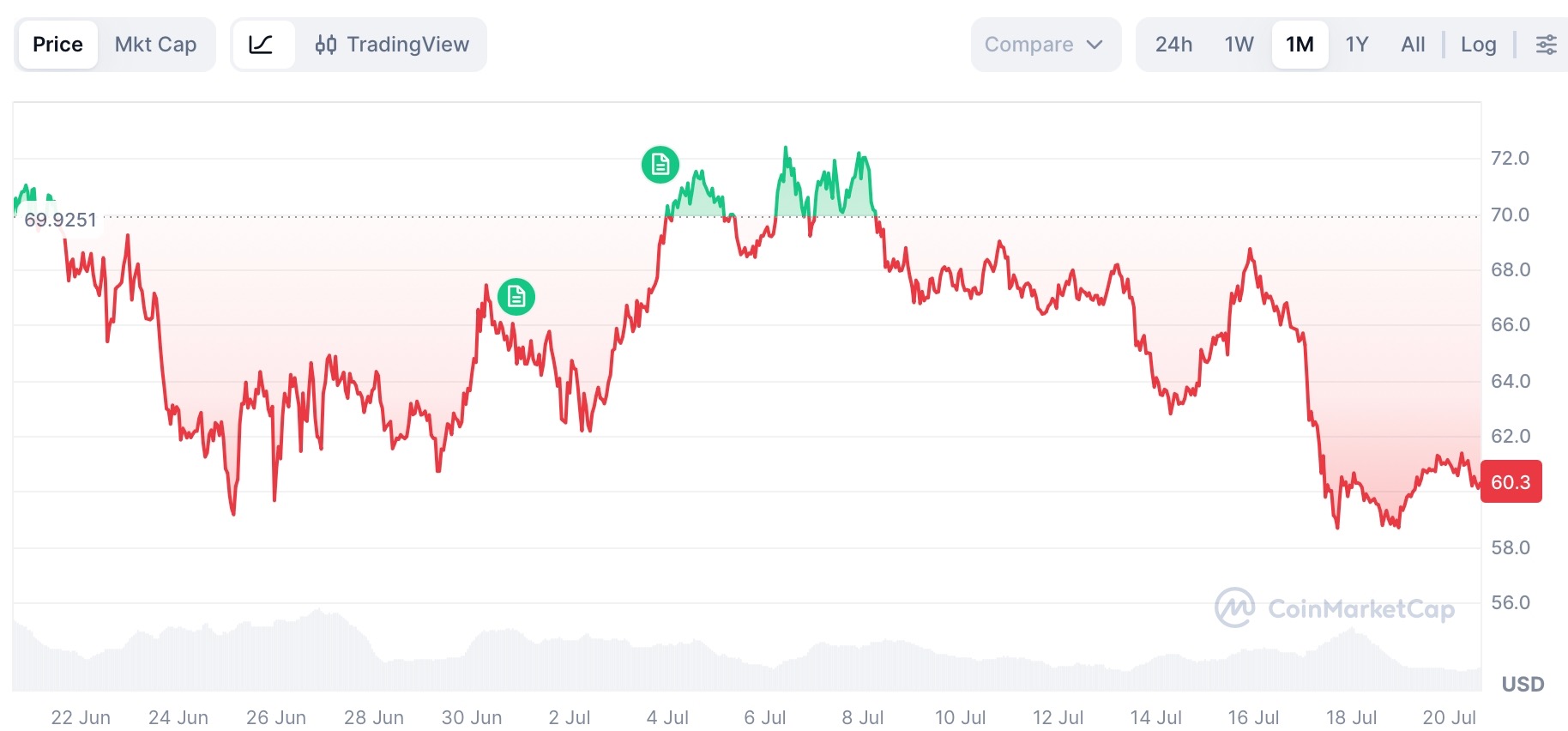
CoinGecko showed HYPE trading around $60 on July 20, with a market capitalization above $13 billion. The token was not in a fresh one-day breakout at the time of review, but Hyperliquid’s market position remained strong.
That distinction matters. This is not simply a “HYPE price is surging” story. It is a story about Hyperliquid’s role as the liquidity leader in on-chain perpetual futures.
Why Hyperliquid’s HIP-3 Markets Matter
One of Hyperliquid’s most important growth drivers is HIP-3, its builder-deployed perpetual market framework.
HIP-3 allows qualified builders to deploy new perpetual markets on Hyperliquid’s infrastructure. That means more assets can be listed without every market being directly controlled by the core team.
This has helped Hyperliquid expand into real-world asset perpetuals, including stocks, commodities, indices and pre-IPO-style assets. Recent reports showed Hyperliquid’s RWA perpetual open interest reaching about $3.6 billion, with total platform open interest near or above $11 billion during the latest peak.
This is important because it changes what a perp DEX can be. In the early days, decentralized perps were mostly crypto-native products. Now, the market is moving toward 24/7 synthetic exposure to assets that normally trade in traditional markets.
Lighter Gains Attention Through Robinhood Wallet
Lighter is another key name in the current perp DEX rotation.
Its biggest catalyst is integration with Robinhood Wallet. Robinhood announced that eligible users in selected jurisdictions can access perpetual futures through Lighter inside Robinhood Wallet. Robinhood also said Lighter committed $11 million worth of LIT incentives to the Robinhood community.
This gives Lighter a different kind of distribution story. Instead of only competing for DeFi-native traders, Lighter is trying to reach users through a familiar retail finance brand.
Lighter’s positioning also focuses on zero-fee trading, ZK infrastructure and on-chain order book execution. That makes it one of the more visible challengers to Hyperliquid.
Still, traders should separate adoption potential from guaranteed success. Wallet integration can bring attention, but long-term market share depends on liquidity, execution quality, risk controls and user retention.
Users can log in to Tapbit to monitor market moves and compare emerging narratives across crypto derivatives and digital assets.
Aster Remains a Strong Challenger
Aster is also part of the perp DEX conversation. Data from perps.info showed Aster with strong open interest, active trading volume and a wide range of supported markets. It competes through broad market coverage, high leverage options and incentive-driven growth.
That gives Aster real visibility, especially among traders looking for newer venues and more aggressive trading environments.
But Aster also shows one of the biggest risks in perp DEX markets: liquidity events can move fast. Recent coverage around LAB token volatility on Aster highlighted how newer assets, concentrated supply and aggressive trading can create sharp price moves.
Aster may remain a serious competitor, but its risk profile should not be ignored.
Why RWA Perps Are Becoming Important
The most interesting part of the perp DEX story is the rise of RWA perps.
RWA perps are perpetual futures linked to real-world assets such as stocks, commodities, indices, ETFs, forex or pre-IPO valuation references. They give crypto traders synthetic exposure to traditional markets without using a conventional broker.
This is a powerful idea. It allows 24/7 trading, stablecoin settlement and global access to assets that are usually limited by market hours, geography or brokerage rules.
But RWA perps also introduce new risks. These products depend heavily on oracles, reference prices and market structure. If the off-chain asset is closed, illiquid or moving sharply, the on-chain perp price may behave differently from what traders expect.
That is why RWA perps are exciting, but they require careful risk management.
Bottom Line
Perp DEXs are back in focus because on-chain futures markets are becoming bigger, broader and more competitive.
Hyperliquid still leads by open interest and has expanded aggressively through HIP-3 and RWA perpetuals. Lighter is gaining attention through Robinhood Wallet and zero-fee positioning. Aster remains a strong challenger with broad market coverage and active incentives.
The opportunity is real, but so are the risks. Perp DEXs combine leverage, fast execution, token incentives, oracle dependency and regulatory uncertainty. Traders should treat the sector as one of crypto’s most important growth areas, but not as a risk-free trend.
For Tapbit users, the key takeaway is simple: the on-chain futures race is no longer a niche DeFi story. It is becoming one of the central battlegrounds in crypto trading.
New users can register on Tapbit to explore market opportunities and follow major crypto trading narratives as they develop.
Frequently Asked Questions (FAQ)
What is a perp DEX?
A perp DEX is a decentralized exchange for perpetual futures. It allows traders to go long or short on assets using leverage, usually from a self-custody wallet and with stablecoin settlement.
What are perpetual futures?
Perpetual futures are futures contracts with no fixed expiration date. Traders can use them to speculate on price movements, hedge positions or gain leveraged exposure to an asset. Funding rates help keep the perp price close to the underlying market price.
Why are perp DEXs back in focus?
Perp DEXs are gaining attention because open interest is rising, product coverage is expanding, and platforms such as Hyperliquid, Lighter and Aster are competing for on-chain futures traders. The sector is also moving beyond crypto into stock-linked, commodity and RWA perpetuals.


