
Let's cut the noise. If you're tracking where institutional money is actually flowing in 2026, it’s all pointing to Real-World Assets (RWA). The sector just crossed the $30 billion mark on-chain, proving Wall Street isn't just experimenting anymore—they are moving actual size.
The latest heavyweight to step up is KAIO. Incubated by Laser Digital (the crypto arm of Japanese investment bank Nomura), they just dropped the tokenomics for their upcoming governance token. Honestly? The structure sends a very clear message to the market: the days of 10,000% APY hyper-inflationary reward tokens are dead.
Here is the desk’s read on KAIO’s setup, the heavy-hitters backing it, and how we are looking at the initial float ahead of the Token Generation Event (TGE).
The Cap Table: A "No Dump" Launch Design
First things first. When evaluating a new token, we don't care about the marketing roadmap; we care about the supply schedule. We want to know exactly who is positioned to dump on retail on day one. KAIO’s setup is surprisingly defensive.
They are minting a hard-capped 10,000,000,000 KAIO tokens with a strict zero-inflation model. Period. No passive dilution to bleed out your holdings over the next three years.
Here is how the pie is sliced:
-
Community & Liquidity (37.5%): The largest bucket, but only 12.5% unlocks at TGE, strictly to seed DEX liquidity.
-
Early Investors (31.0%): Strategic backers.
-
Foundation (17.0%): Ecosystem governance and treasury.
-
Team (11.0%): Core contributors.
-
Pre-TGE Sales (3.5%): Early retail allocations.
Our Angle: The single most critical detail here is the lockup. On TGE day, the team and early investors are completely sidelined. They face a hard 6 to 12-month cliff, followed by a 60-month linear vest. That means insider sell pressure is effectively zero for the first half-year. When you combine a paper-thin initial float with high institutional hype, you usually get massive early volatility. Trade accordingly.
TradFi Muscle Meets Crypto Liquidity
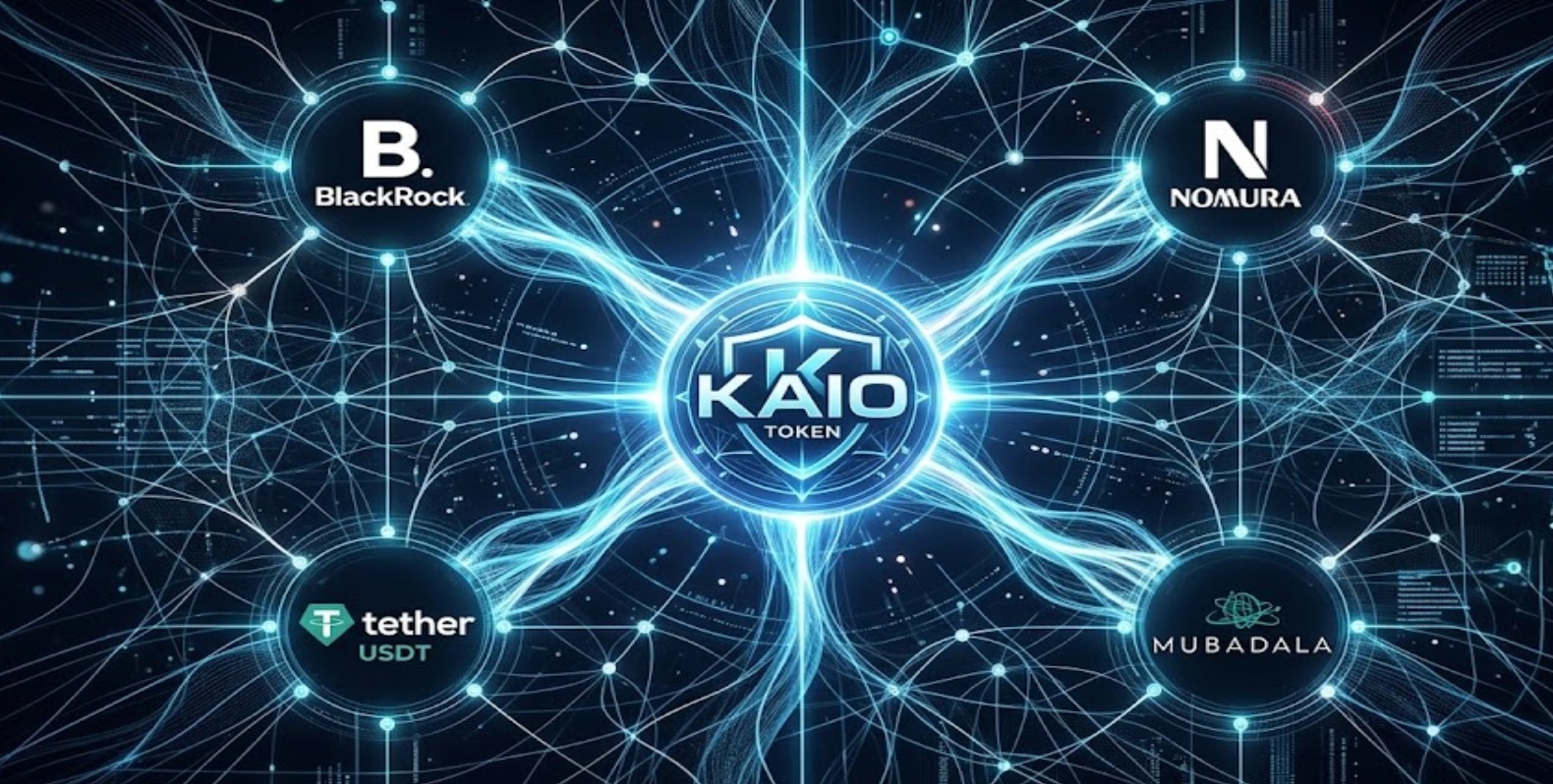
In the RWA space, your token is only as good as your institutional pipeline. KAIO is already sitting on about $100 million in TVL across 10+ chains, but the names are what matter.
They’ve integrated funds from BlackRock, Brevan Howard, and Hamilton Lane. Plus, there is heavy chatter right now about an upcoming tie-up with Mubadala Capital (the UAE sovereign wealth fund).
They also just closed an $8 million strategic round led by Tether, bringing their total raise to roughly $19 million. It is a textbook fundamental setup: Nomura handles the TradFi compliance and banking rails, while Tether brings the native crypto liquidity needed to actually move the markets.
The Elephant in the Room: No Revenue Sharing
We have to look at the downside. What does the token actually do?
It gives you access to protocol products, staking yields, and governance votes. But the official docs are crystal clear: holding KAIO does not give you a legal right to protocol fee revenue.
Why? Because passing dividends directly to holders on regulated Wall Street assets is a fast track to getting classified as an unregistered security. So, the token’s value accrual relies entirely on "governance premium" and staking utility, rather than actual cash flow. You are betting on the network's growth, not a dividend check.
How We Are Positioning
They’ve locked down the institutional supply side, and in Q2 2026, they are launching the KASH App to funnel retail liquidity into these RWA yields.
For us, the play is watching the TGE execution. With zero inflation and a 6-month insider cliff, the token's structure is designed to hold the line in the short term. We’ll be tracking the actual order book depth the second it goes live.
Ready to trade the RWA supercycle? Log in to your Tapbit terminal to monitor the spot order books and perpetual futures depth. If you want to trade with institutional-grade matching engines, register your Tapbit account today.
Frequently Asked Questions (FAQ)
Are they going to print more KAIO tokens later?
No. The supply is hard-capped at 10 billion tokens. They went with a zero-inflation model, so you don't have to worry about the protocol arbitrarily minting new supply and diluting your bag.
Am I going to get dumped on by early VC investors at launch?
Unlikely in the short term. The tokenomics enforce a strict 6 to 12-month "cliff" for the core team and early investors. Their tokens are fully locked for the first six months minimum, which severely chokes off early insider sell pressure.
Does holding the token mean I get a cut of the protocol's profits?
No. To dodge the SEC and remain compliant with global securities laws, KAIO doesn't pay out traditional dividends from protocol fees. Its value comes from governance voting power, access to specific products, and staking yields.


