

Faston Crypto Etherions has the kind of name that can get attention in crypto. It sounds like a mix of Ethereum, NFT creatures, GameFi and DeFi. The project is described as an ecosystem built around the EFC token, tradable “Etherions” NFTs, staking and governance.
On paper, the idea is easy to understand. Players would use EFC inside the ecosystem, trade or breed NFT creatures, stake tokens for rewards and vote through a DAO. It is the kind of GameFi structure traders have seen before.
But that is also the problem. The concept is familiar. The proof is not there yet.
A Good Story Is Not Enough

Crypto has never had a shortage of good stories. A project can say it has a token, NFTs, staking, a game economy and a DAO. That does not mean the product is live, the contracts are safe, or the token is actually liquid.
For EFC, the important question is not whether the idea sounds interesting. The question is whether traders can verify the basics.
-
Where is the official smart contract?
-
Where is the whitepaper?
-
Who is the team?
-
Has the code been audited?
-
Is there a real exchange listing?
-
Can users check supply, holders and transactions on a block explorer?
Right now, those answers are not clear enough. That puts EFC in the “watch first” category, not the “trade first” category.
The Name Can Be Misleading
The word “Etherions” naturally makes people think of Ethereum.
That may help the project sound more familiar, but traders should be careful with that association. A name that sounds close to Ethereum does not mean the project is connected to Ethereum, audited by Ethereum developers, or supported by any major ecosystem.
Branding is not verification. If a project says it is EVM-compatible, there should be a network, a contract address and explorer data that users can check. Without that, the claim is only a claim. In crypto, anything that cannot be checked should not be treated as fact.
GameFi Needs Real Users, Not Just Lore
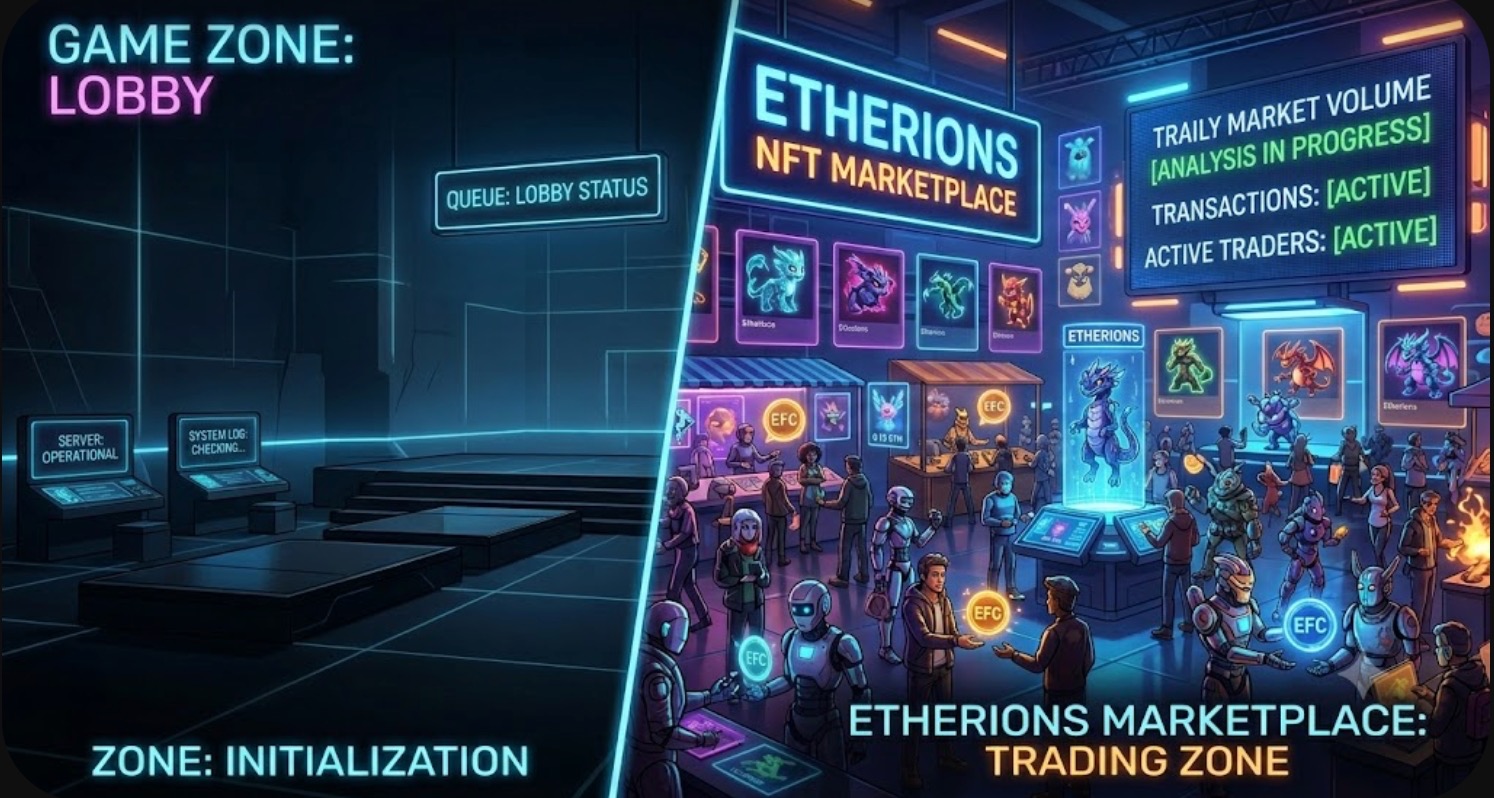
Faston Crypto Etherions is being framed as a GameFi and NFT ecosystem.
That means the token’s value would likely depend on real activity inside the game: players buying, trading, breeding, staking and using EFC because the ecosystem gives them a reason to do so.
That is a hard thing to build. Many GameFi projects had strong early narratives but failed to keep users once rewards slowed down. A game economy only works if people want to keep playing after the first wave of hype fades.
So the key question for EFC is simple: Is there a real game economy, or only a description of one? Until traders can see live contracts, marketplace activity, NFT volume and user participation, the ecosystem should be treated as unproven.
Do Not Rush to Find a Price
With unverified tokens, people often want one thing first: the price. That is the wrong starting point.
If there is no confirmed contract and no trusted listing, a quoted price may not mean much. It may refer to a fake token, a thin liquidity pool, an unofficial market or a different asset using the same ticker.
For EFC, the better question is not “What is the price?” The better question is “What exactly is being priced?” Until that is clear, any price number can create a false sense of confidence.
The Bigger Lesson
EFC is a useful reminder of how crypto research should work.
A project can sound good and still be too early to trade. A name can feel familiar and still have no verified link to a trusted ecosystem. A token can trend online before there is enough public data to confirm what it really is.
That does not mean every unverified project is a scam. It means traders should not fill in the blanks themselves. The market rewards early conviction sometimes, but it punishes blind trust more often.
Bottom Line
Faston Crypto Etherions may become something worth watching, but EFC is not ready to be treated like a fully verified crypto asset.
The project claims to combine a token, NFT creatures, staking and governance. That structure is familiar, but the basic proof points are still missing. Until those gaps close, EFC should stay on a watchlist, not be treated as a confirmed opportunity.
In crypto, being early is only useful if you are early to the right asset. With EFC, the smarter move is to verify first, trade later — or not trade at all until the project proves what it actually is.
Traders can follow more market updates on Tapbit, log in, or register to stay connected with global crypto opportunities.
Frequently Asked Questions (FAQ)
What is Faston Crypto Etherions?
Faston Crypto Etherions is described as a crypto ecosystem built around the EFC token, Etherions NFT creatures, staking and governance. However, the project still lacks several basic verification signals, so traders should treat it as unconfirmed until more public data is available.
What is EFC?
EFC is the token that Faston Crypto Etherions claims will power its ecosystem. It is said to be used for marketplace activity, NFT-related functions, staking and governance, but these utilities cannot be fully verified without an official smart contract and live ecosystem data.
What are Etherions?
Etherions are described as NFT creatures inside the Faston Crypto Etherions ecosystem. The project claims they may be traded, bred, trained or used in gameplay, but traders should look for verified marketplace activity before treating this as an active NFT economy.


