
EVAA is getting attention again, but not only because its token has been moving.
The bigger story is what EVAA is trying to become inside the TON ecosystem. It is a lending protocol, yes, but describing it only that way misses the point. TON does not simply need another DeFi app. It needs financial infrastructure that ordinary Telegram users can actually touch.
That is where EVAA becomes interesting.
The protocol gives users a way to deposit assets, earn yield, and borrow against collateral. The model is familiar. Aave and Compound have already proven that lending markets are one of the most important building blocks in DeFi. What is different here is the distribution layer. EVAA is building inside an ecosystem where the front door is not just a wallet or a website. It can be Telegram.
That changes the user experience, and potentially the size of the addressable market.
Why Lending Matters for TON
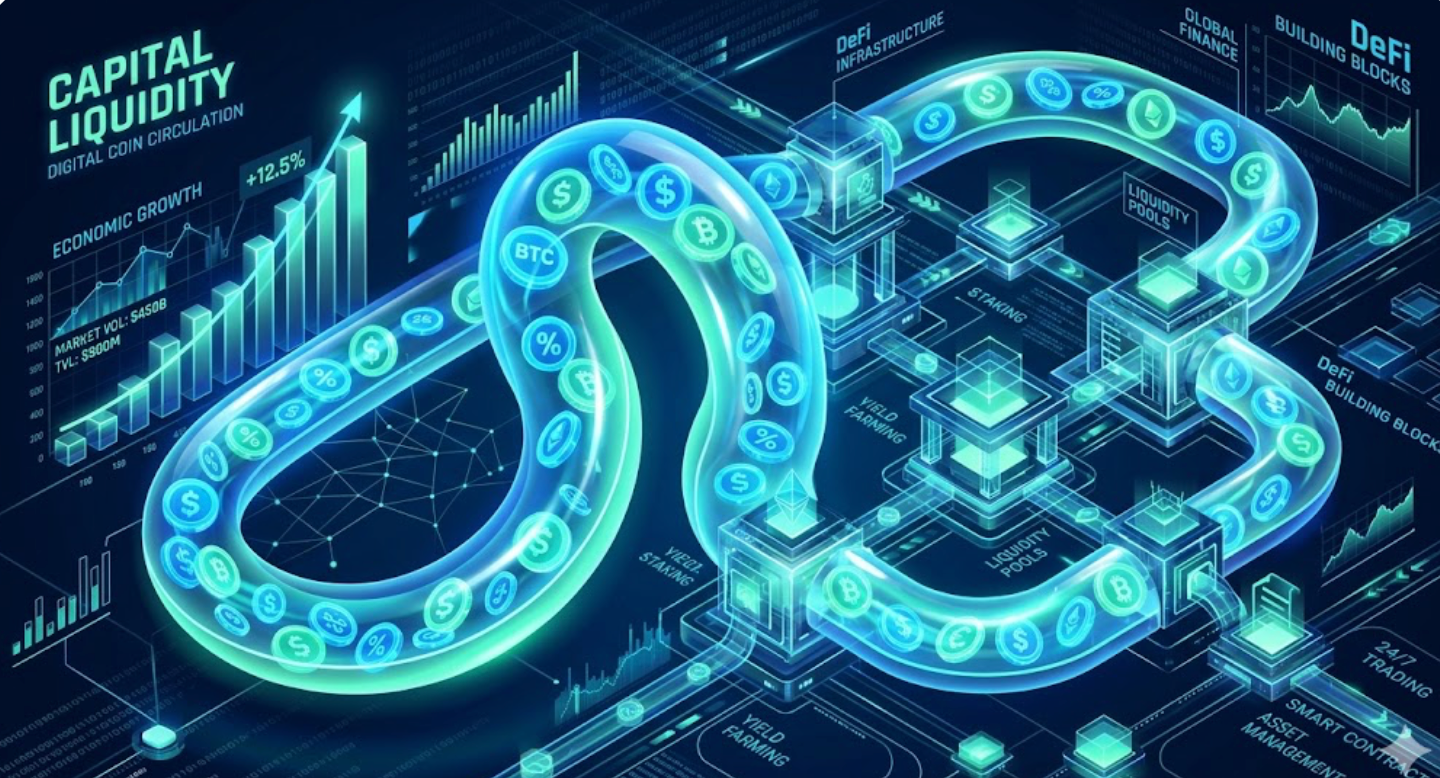
Every growing chain eventually reaches the same point. Early users arrive, assets begin circulating, and then the ecosystem needs a money market.
Without lending, capital is less efficient. Users either hold assets passively or sell them when they need liquidity. With lending, those same assets can be deposited, borrowed against, and reused across the ecosystem.
For TON, this is especially important. The network has a unique advantage because of Telegram, but user reach alone does not create a mature financial system. DeFi needs liquidity, credit, stablecoin usage, and risk markets. EVAA is trying to provide one of those missing layers.
If TON DeFi keeps growing, a native lending market becomes more valuable. Depositors need a place to earn yield. Borrowers need liquidity without selling their positions. Other applications need pools they can build around.
That is the role EVAA wants to occupy.
The Telegram Layer Is the Real Hook
Most DeFi products still feel too complicated for normal users.
Even after years of development, the experience often involves browser extensions, wallet approvals, network switching, bridge risk, gas fees, and interfaces that assume users already know how DeFi works. That is fine for crypto-native traders. It is much less useful for the next wave of users.
EVAA’s advantage is that it leans into Telegram and TON instead of fighting that reality. If lending can be accessed through a Telegram-native flow, the product starts to feel less like a separate DeFi destination and more like a financial feature inside an app users already know. That does not remove risk, but it does lower the psychological barrier.
This is why EVAA should not be judged only as “Aave on TON.” The lending mechanics are not the main innovation. The possible innovation is distribution. A protocol that can meet users where they already are may have a better chance of expanding beyond the usual DeFi crowd.
How EVAA Works

EVAA follows the standard pool-based lending model.
Users deposit assets into liquidity pools and earn interest from borrowers. Borrowers deposit collateral and take out loans against it. Rates move depending on supply and demand. When borrowing demand rises, borrowing costs rise as well, which can attract more deposits into the pool.
The protocol relies on over-collateralization. Borrowers cannot simply take out the full value of what they deposit. They need to maintain a safety buffer. If the value of their collateral drops too far, liquidation can be triggered to protect the system.
This is not a new design, but it is the design that has made DeFi lending work at scale.
The key question for EVAA is not whether the model is familiar. It is whether the model can gain real usage inside TON.
The Token Has Added a New Layer of Attention
EVAA is now also being traded as a token, which makes the story more complicated.
On one hand, the token gives the market a way to price future expectations around the protocol. Governance, incentives, ecosystem participation and future utility all become part of the narrative.
On the other hand, token price can move much faster than protocol fundamentals. That is what traders need to watch. A sharp token rally can bring attention, liquidity and new users. But it can also create a gap between market excitement and actual protocol activity. If price runs ahead of TVL, borrowing demand and user growth, the move becomes harder to sustain.
For EVAA, the healthier version of the story would be simple: token attention brings more users, more deposits, more loans and deeper liquidity. The weaker version is also simple: price moves first, but protocol usage does not follow.
The next few months will show which version is closer to reality.
TVL Is Still the Number to Watch
TVL is sometimes overused in DeFi analysis, but for lending protocols it still matters.
A lending market with deeper liquidity is more useful. Borrowers can access more capital. Depositors have more confidence. Other protocols are more likely to integrate with it. Larger pools also make the product feel less experimental.
EVAA has already become one of the more visible lending projects on TON, but it is still early compared with the biggest lending markets in DeFi. That leaves room for growth, but it also means expectations need to stay realistic.
A small lending protocol can grow quickly. It can also be fragile.
If TON activity expands and more assets flow into EVAA, the protocol’s position becomes much stronger. If liquidity stays thin or usage is mostly driven by incentives, the market may treat EVAA more like a short-term narrative trade than a durable infrastructure play.
Why EVAA Is Worth Watching
EVAA sits at the intersection of three narratives that traders care about right now: TON, Telegram, and DeFi infrastructure.
That combination is powerful because it is not just about speculation. There is a practical need behind it. TON needs lending markets if it wants a deeper financial ecosystem. Telegram gives TON projects a distribution channel most chains do not have. EVAA is trying to turn that distribution into real financial activity.
That does not guarantee success. Execution still matters. Security matters. Liquidity matters. Risk parameters matter. User retention matters.
But the setup is worth watching because EVAA is attacking a real bottleneck in the TON ecosystem.
The Risks Are Not Small
The easier the front end becomes, the more important it is to remember that the back end is still DeFi.
Users still face liquidation risk if collateral prices move sharply. Smart contracts can fail. Oracles can produce bad data. Liquidity can disappear during stress. Incentives can attract capital quickly and lose it just as quickly.
There is also TON ecosystem risk. Compared with Ethereum and larger multi-chain DeFi environments, TON’s DeFi market is still developing. Asset depth, stablecoin liquidity, user behavior and institutional participation are all still maturing.
For EVAA token traders, volatility is another issue. Smaller-cap protocol tokens can move sharply in both directions, especially when the market starts trading a fresh narrative. A good protocol story does not remove the risk of a bad entry.
What Comes Next
EVAA now needs to prove that attention can become usage.
The most important signals are straightforward: TVL growth, active loans, deposit demand, borrowing demand, asset expansion and repeat users. Governance participation and incentive design will also matter, especially as the token becomes a bigger part of the ecosystem.
If EVAA can grow beyond campaign-driven activity and become a default lending venue for TON users, the project will have a stronger long-term case.
If not, the token may remain a volatile way to trade the TON DeFi narrative rather than a clear reflection of protocol adoption.
Bottom Line
EVAA is not interesting because it reinvented lending. It is interesting because it brings lending into one of crypto’s most unusual distribution environments.
TON has Telegram. That gives its DeFi protocols a chance to reach users that traditional DeFi has struggled to onboard. EVAA is one of the projects trying to turn that advantage into real financial infrastructure.
The recent token attention has put EVAA back on the market’s radar. Now the protocol has to show that the attention is justified.
If TON DeFi continues to grow, EVAA could become an important money market layer. If usage fails to follow the narrative, the token may remain mostly a high-volatility trade.
For now, EVAA is worth watching for a simple reason: it is testing whether Telegram-native DeFi can become more than a good story.
Traders can follow more market updates on Tapbit, log in, or register to stay connected with global market opportunities.
Frequently Asked Questions (FAQ)
What is EVAA Protocol?
EVAA is a lending protocol built for the TON ecosystem. It allows users to deposit assets to earn yield or borrow liquidity by using supported assets as collateral. The bigger idea is to make DeFi lending easier to access through TON and Telegram-native user flows.
Is EVAA just another version of Aave?
Not exactly. The lending model is familiar, but EVAA’s main difference is its environment. Aave grew mainly through Ethereum and multi-chain DeFi users, while EVAA is focused on TON and the Telegram ecosystem. Its edge is not a brand-new lending mechanism, but easier distribution and access.
Why does Telegram matter for EVAA?
Telegram gives TON projects a user entry point that most blockchains do not have. If users can access lending through a Telegram-native experience, DeFi feels less like a separate crypto product and more like a financial feature inside an app they already use.


