
If you have been looking into Ethereum mining recently, you have probably run into a lot of outdated guides, conflicting advice, and broken calculators.
The reality is simple: traditional Ethereum mining ended in 2022 — but your options to earn from the ecosystem did not.
Today, you cannot mine ETH on the main Ethereum network, yet you can still repurpose old mining hardware, earn yield through staking, or build a position in ETH through regular trading.
What Ethereum Mining Used to Be: Rigs, ASICs, and Mining Software
The Rigs: GPUs and Later ASICs
Most home and semi‑pro miners built GPU rigs. You’d take 4, 6, or 12 consumer graphics cards (AMD or NVIDIA), strap them onto a wire frame, add a cheap motherboard, a low‑power CPU, and a beefy power supply. Then you’d run it 24/7, praying your electricity bill wouldn’t eat all your profits.
Ethereum’s PoW algorithm was called Ethash. It was designed to be ASIC‑resistant at first, but over time, companies like Bitmain released ASICs specifically for Ethash. These were far more efficient than GPUs — but also useless for anything else. Once Ethereum mining died, those ASICs became expensive paperweights unless they worked on other Ethash‑based chains.
|
Hardware |
Pros |
Cons |
|
GPU rigs |
Flexible (can mine other coins), resellable cards |
Lower efficiency, more heat and noise |
|
ASICs |
Extremely efficient, high hash rate |
Single‑purpose, useless if algorithm dies |
The Software: Connecting Your Rigs to the Network
Your hardware needed software to actually talk to the blockchain. Popular options back then included:
-
Ethminer – open‑source, command‑line, a bit rough but reliable
-
PhoenixMiner – faster, more features, but closed‑source (some people didn’t trust it)
-
TeamRedMiner – optimized for AMD cards
-
lolMiner – another solid choice, especially for mixed rigs
The software would load the Ethash DAG (a large dataset that grew over time — eventually exceeding 4GB) and start hashing. You’d point it at a mining pool, and off you went.
Mining Pools: The Only Realistic Option for Most
Solo mining Ethereum after 2018 was statistically stupid for anyone without industrial‑scale hardware. The network hash rate was so high that your single rig might find a block once every few years — if you were lucky.
So everyone joined pools. A pool combined thousands of miners’ hash power. When the pool found a block, it split the reward proportionally based on how much work each miner contributed.
Popular pools back then included Ethermine, F2Pool, and SparkPool (before it shut down). Pools took a small fee (usually 0.5–2%) and provided steady payouts.
Cloud Mining: A Warning
There was also cloud mining — paying a company to run rigs for you and send you the rewards. In theory, convenient. In practice, most cloud mining services were either unprofitable or outright scams. If you ever see a "cloud mining" ad promising guaranteed returns, run the other way.
Why Ethereum Mining Ended: From Proof-of-Work to Proof-of-Stake
The turning point for Ethereum mining was The Merge, completed on 15 September 2022. This was not just another upgrade; it replaced the network’s core consensus mechanism.
Under Proof-of-Work, miners proved their commitment by spending energy on computations. After The Merge, Ethereum shifted to Proof-of-Stake, where validators prove their commitment by locking up ETH as collateral.
According to the official Ethereum documentation, this shift cut the network’s energy consumption by around 99.95%. Instead of warehouses of GPUs and ASICs, Ethereum now relies on distributed validator nodes staking ETH.
For miners, the impact was immediate and absolute. Once the PoW chain merged into the PoS chain:
-
Mining software could no longer submit valid PoW blocks to the Ethereum mainnet.
-
Existing Ethereum mining rigs became unusable for ETH itself, regardless of their hash rate.
-
Rewards for securing the network flowed to validators staking ETH, not to miners burning electricity.
Ethereum mining is not paused, throttled, or waiting for a "v2". On the main network, it is permanently removed by design. If you still see offers to "mine ETH" on modern Ethereum, they are either using the term loosely (e.g., referring to staking) or are outright misleading.
Repurposing ETH Mining Rigs: Ethereum Classic and Other PoW Options
If you invested in Ethereum mining hardware, your first question after The Merge was probably: what can I do with all this gear?
For PoW miners, the most direct path has been Ethereum Classic (ETC). This network preserves Ethereum’s original PoW design and runs a modified version of Ethash known as ETCHash.
Because ETCHash is derived from Ethash, much of the hardware that once powered Ethereum mining can be redirected to ETC with relatively minor configuration changes. In practice, that means:
-
GPU rigs with at least 4 GB of VRAM can still hash ETCHash, assuming your cards and drivers remain supported and your power costs are competitive.
-
Ethash/ETCHash ASIC miners built for Ethereum can often be re‑pointed to ETC mining pools, although you should confirm compatibility with the manufacturer or community documentation.
Before you flip your rigs back on, you need to treat mining as an economic problem, not just a technical one. A typical profitability check involves:
-
Your total hash rate (MH/s or GH/s).
-
Your real electricity price per kWh.
-
The current ETC price and network difficulty.
Dedicated mining calculators can combine those inputs to estimate daily revenue and net profit after power costs. For most small operators, joining an ETC mining pool is still essential; solo mining remains a statistical long shot without industrial‑scale hardware.
Beyond ETC, some miners have moved to other PoW chains with GPU‑ or ASIC‑friendly algorithms. In each case, the same logic applies: check compatibility, input your numbers into a calculator, and do not assume that "hashing equals profit".
From Ethereum Mining to Ethereum Staking: Validators vs Miners
If your real goal is to accumulate ETH (not just run hardware), you need to understand staking, not mining.
Under PoS, validators perform a similar role — they propose and attest to blocks — but they’re chosen based on how much ETH they’ve locked up, not how much hash power they have.
|
Aspect |
Mining (PoW) |
Staking (PoS) |
|
Resource |
Electricity + hardware |
Capital (ETH locked) |
|
Entry barrier |
Rigs, cooling, electricity |
32 ETH for solo, or less via pools |
|
Ongoing costs |
Power, maintenance, depreciation |
Infrastructure (node uptime) |
|
Risk |
Hardware failure, rising electricity |
Slashing (penalties for misbehavior) |
|
Rewards |
Block reward + fees |
Protocol yield + tips |
There are two main ways to stake:
-
Solo staking – 32 ETH, you run your own validator. Requires technical know‑how and reliable uptime.
-
Liquid staking – Deposit any amount into a pool (e.g., Lido, Rocket Pool). You get a receipt token (stETH, rETH) that earns yield and can be used elsewhere in DeFi.
For most traders and investors, staking is simply a yield overlay on top of an existing ETH position — not a separate technical project.
Ethereum Exposure Without Mining: Buying and Trading ETH
Not everyone wants to run hardware or operate validators. If your objective is straightforward Ethereum exposure — holding, trading, or occasionally staking — then you do not need to worry about Ethereum mining at all.
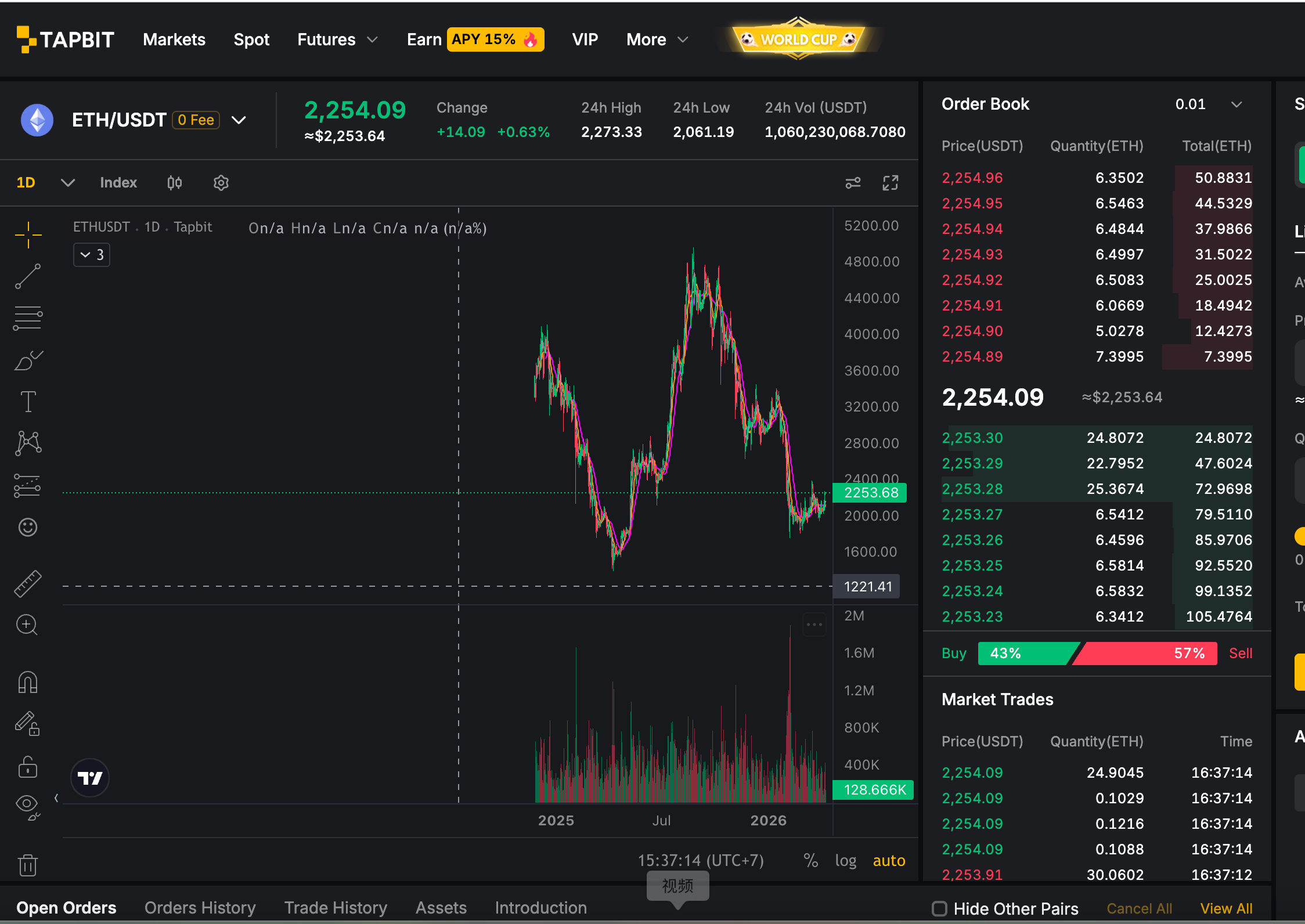
On a centralized platform, the basic process looks like this:
-
Create an account – Start trading by opening an account and completing any required identity checks based on your jurisdiction.
-
Deposit funds – Add fiat currency via supported payment methods or transfer in crypto from an external wallet.
-
Find the ETH market – Navigate to the ETH trading pair that fits your base currency (for example, ETH/USDT or ETH/USD).
-
Place an order – Use a market order for immediate execution at the current price, or a limit order if you want to set a maximum buy or minimum sell price.
-
Decide on storage – Keep ETH on the exchange for active trading, or move it to a personal wallet if you prefer self‑custody and longer‑term holding.
For active traders, it is also worth reviewing the platform’s trading fees so you understand maker and taker rates, as these costs can add up if you execute frequently.
This route bypasses Ethereum mining entirely. Instead of spending capital on hardware and power, you allocate it directly to the asset and decide later whether you want to stake, lend, or simply hold.
The State of Ethereum Mining Today
The era when you could point a GPU rig at Ethereum, pay your power bill, and collect ETH block rewards is over. Proof-of-Stake has replaced Proof-of-Work on the network that matters most for ETH, and mining is gone with it.
What has not disappeared are your options. If you already own mining hardware, PoW chains like Ethereum Classic offer a way to keep it active — provided the economics add up. If you are more interested in growing an ETH position than running machines, staking has taken over the role that mining once played in rewarding network participants.
And if you simply want to hold or trade ETH, you can create an account, fund it, and start building a position without ever touching a mining rig.
Whichever route you choose, approach it with the same principles: verify your information, understand the risks, and never commit more capital than you can afford to lose. If you need practical help with accounts, security, or funding, Tapbit’s comprehensive guides and customer service team are there to support you as you begin or refine your Ethereum journey.
FAQ
Can you still mine ETH on the Ethereum mainnet?
No. After The Merge in September 2022, Ethereum permanently abandoned Proof-of-Work. Traditional Ethereum mining on the main network is no longer possible, regardless of your hardware setup.
What is the difference between an Ethereum miner and an Ethereum validator?
Miners used computing power and electricity to solve PoW puzzles and add blocks, earning rewards in the process. Validators lock up ETH as collateral under Proof-of-Stake and are selected to propose and attest to blocks based on their stake.
What can I mine with an old Ethereum mining rig?
Many former Ethereum mining rigs can be redirected to Ethereum Classic or other PoW coins with compatible algorithms. You will need to reconfigure your mining software, join an appropriate pool, and run the numbers with a profitability calculator to see if it still makes sense at your power rates.
How do Ethereum mining profitability calculators work?
They take inputs like your total hash rate, power consumption, electricity price, pool fees, and the current coin price, then estimate your expected daily or monthly revenue and profit. These are estimates, not guarantees, because network difficulty and market prices change continuously.
Is Ethereum cloud mining still relevant?
Because Ethereum itself no longer uses PoW, any "ETH cloud mining" offer deserves extra scrutiny. In general, cloud mining contracts can be risky due to price volatility, fixed contract terms, and the difficulty of independently verifying the provider’s real hash power.


