
For years, artificial intelligence in the crypto sector was strictly a spectator. It summarized governance proposals, audited smart contracts, and powered sentiment analysis dashboards. It was a useful copilot, but it could not drive.
In 2026, that architecture fundamentally fractured. AI has evolved from an off-chain analytical tool into an autonomous on-chain actor. Equipped with their own digital identities, wallet permissions, and decision-making logic, AI agents are now actively moving capital.
This is not just an incremental tech upgrade. The transition from human-controlled accounts to machine-controlled accounts is triggering a structural shift in how liquidity, decentralization, and trading execution actually work. Here is the breakdown of how the machine-to-machine (M2M) economy is reshaping Web3.
The Execution Layer: Solving the Private Key Problem
The historical barrier to AI autonomy in crypto was security. Handing a large language model (LLM) absolute control over a private seed phrase is a catastrophic security risk.
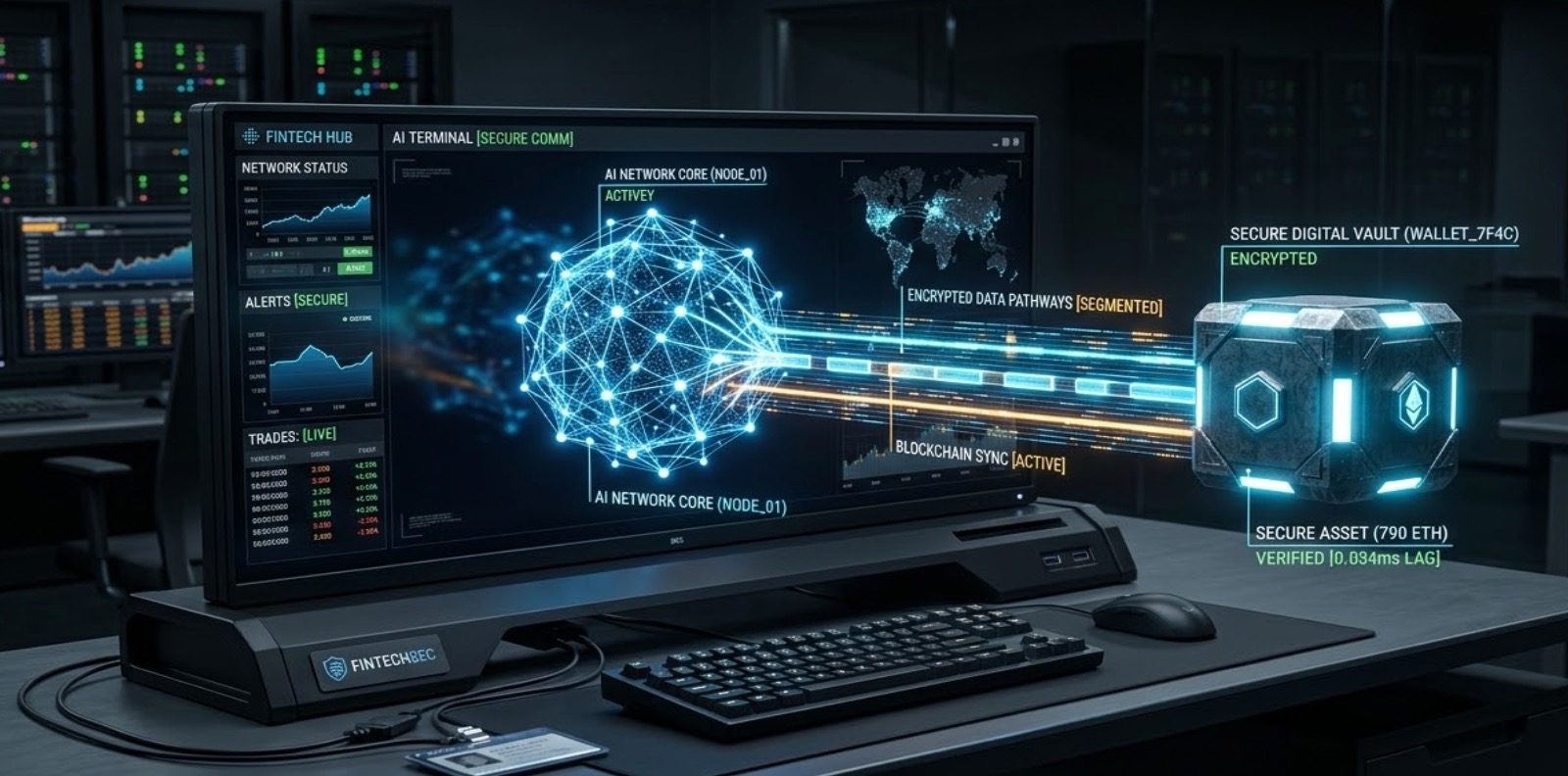
The industry bypassed this bottleneck through the maturation of a three-layer AI stack (Inference, Execution, and Economic), specifically leveraging session wallets and account abstraction (ERC-4337). Today, a user does not give an AI their private key. Instead, they grant the agent a narrow, task-specific permission slip.
The AI can initiate a transaction—like executing an arbitrage trade or rebalancing a portfolio—but it can only do so within the strict financial boundaries hardcoded by the user. The private keys remain encrypted, and the agent acts purely as an autonomous routing engine.
Intent-Centric Execution: Killing the UI Bottleneck
Because AI agents can safely execute transactions, the way humans interact with decentralized applications (dApps) is being entirely rewritten. The market is shifting from manual click-paths to intent-centric execution.
Moving capital across the blockchain is traditionally an exercise in friction. A user must connect a wallet, approve token spending limits, sign multiple smart contracts, calculate slippage, and manually pay cross-chain gas fees.
An intent-centric model abstracts this completely. A user inputs a single natural language goal: "Deploy 10,000 USDC into the highest-yield, audited stablecoin pool across Ethereum and Arbitrum."
The AI agent takes over. It scans liquidity pools, selects the most efficient bridging route, optimizes gas management, and executes the combined protocol calls. What used to require a dozen manual steps now happens autonomously in seconds.
The Machine-to-Machine (M2M) Economy
As AI agents assume control of trading execution, they need a frictionless way to interact with each other. This is creating a terrifyingly efficient, high-frequency M2M economy.
When a trading agent needs real-time oracle pricing, specialized on-chain data, or complex computational power from another AI node, it uses micropayment protocols like x402. An agent can autonomously sign a fraction-of-a-cent stablecoin payment to another machine, settling the transaction instantly.
Tokens are no longer just tools for human speculation; they are becoming the native units of account for software entities negotiating and settling transactions in real-time.
The Risk: Centralization in DAO Governance
While AI execution is streamlining DeFi, its entry into Decentralized Autonomous Organization (DAO) governance is raising red flags.
Historically, DAOs suffer from dismal voter participation. To fix this, protocols are allowing users to delegate their voting power to "AI digital twins" trained on the user's past behavior. The agent reads the proposals and votes autonomously.
The risk here is profound centralization at the model layer. If thousands of on-chain voting entities are all secretly relying on the same three off-chain LLM providers (like OpenAI or Anthropic) for their reasoning engines, network governance becomes highly vulnerable to bias, API outages, or model manipulation.
Adapt Your Strategy on Tapbit
The rise of autonomous Web3 agents dictates a harsh reality for retail traders: humans cannot compete with machines on execution speed, cross-chain routing, or 24/7 market monitoring. As the market transitions to machine-driven liquidity, your edge relies entirely on the infrastructure you use to access the market.
-
➡️ Trade the AI Narrative: Log in to Tapbit to access deep liquidity on the foundational tokens powering this revolution, including decentralized compute networks and AI infrastructure protocols.
-
➡️ Automate Your Edge: Leverage Tapbit's advanced trading tools, robust API endpoints, and zero-slippage execution to systematize your trading strategies against automated market makers.
-
➡️ New to Tapbit? Register your free account today and arm your portfolio with the professional tools required for the 2026 market.
Frequently Asked Questions (FAQ)
What is a Web3 AI agent?
A Web3 AI agent is an autonomous software entity that can hold an on-chain identity, interpret data, and interact with smart contracts to execute financial tasks without constant human intervention.
How is an AI agent different from a traditional crypto trading bot?
Traditional trading bots follow rigid, pre-programmed rules (like a simple grid strategy). AI agents can interpret complex user intents, adapt to changing market conditions dynamically, coordinate across multiple blockchain protocols, and pay for external data autonomously.
Are my funds safe if an AI agent makes a trade?
Yes, provided you use secure delegation frameworks. Modern AI agents use "session wallets" or account abstraction (ERC-4337). The AI never holds your actual private keys; it only receives a limited permission slip to execute specific actions within boundaries you define.
What is "intent-centric" trading?
Intent-centric trading is a model where the user specifies the desired outcome (the "intent"), rather than manually executing the steps to get there. The user says what they want, and an AI agent figures out the bridging, swapping, and gas fees required to make it happen.
Why are tokens important for AI agents?
In a machine-to-machine (M2M) economy, AI agents need a frictionless way to pay each other for data, API calls, and computational power. Crypto tokens serve as the native, borderless currency for these automated micro-transactions.
Disclaimer: This article is for educational and informational purposes only and does not constitute financial advice. The cryptocurrency market, particularly emerging sectors like AI and Web3 integration, carries extreme volatility and smart contract risks. Always conduct independent research before deploying capital or utilizing automated trading tools.


