
On-Chain Signal: Large Inflows Raise Sell-Side Concerns
Shiba Inu is seeing some turbulence again. On-chain data shows a significant amount of SHIB moving into exchanges over a short period.
According to data from CryptoQuant, nearly 4 billion SHIB tokens were transferred into exchanges within 24 hours, pushing total exchange reserves up a notch—from 81.20 trillion to 81.29 trillion SHIB. In simple terms, more SHIB moved from private wallets to trading platforms, where it can be readily sold.
In crypto markets, this kind of “net inflow” is usually interpreted as a bearish signal: holders may be preparing to sell.
Price Action: Weak Momentum, Technical Resistance
Around the same time as these large inflows, SHIB’s price dropped by roughly 4% —the sell-side impact was pretty noticeable.
From a technical perspective:
- SHIB has been stuck in a descending triangle pattern and failed to break out this time
- Price got rejected at resistance, confirming that buying momentum isn’t strong enough
- The short-term structure remains tilted to the downside
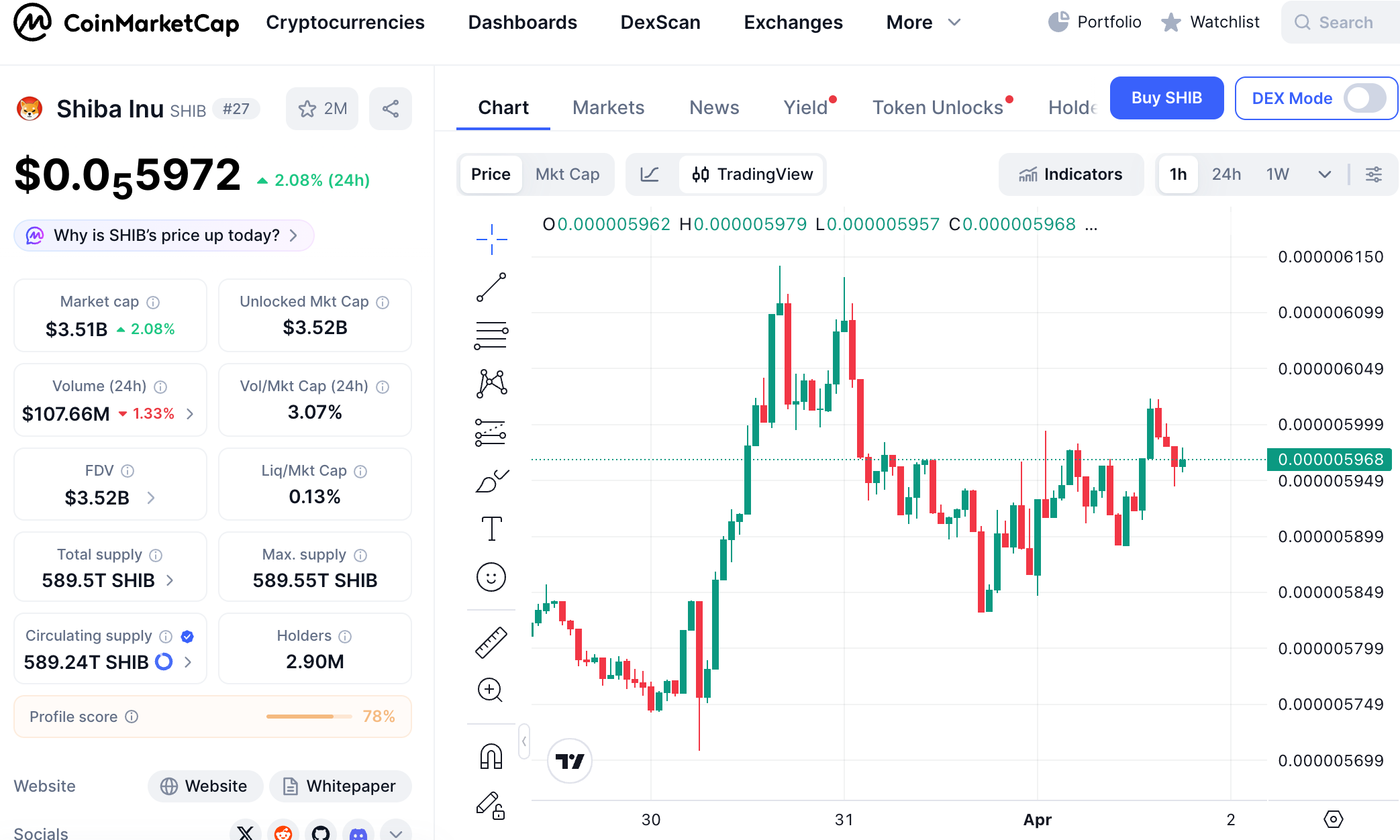
In technical analysis, a descending triangle is often seen as a bearish continuation pattern—especially when combined with rising exchange inflows, market sentiment tends to turn more cautious.
On-Chain Data: Not Entirely Bleak
But if you only focus on short-term selling pressure, you might miss what’s happening beneath the surface. On-chain data shows that SHIB’s network fundamentals aren’t that bad.
- The number of SHIB holders has surpassed 1.5 million
- New wallet growth has been steady, adding about 5,000 to 12,000 new wallets per month
It’s an interesting contrast: while some are moving tokens to exchanges preparing to sell, others are still coming in. That suggests retail interest in SHIB hasn’t really cooled off.
Why Exchange Inflows Matter
Some might wonder: what’s the big deal with moving tokens from a wallet to an exchange?
The difference comes down to liquidity. Tokens sitting in a wallet need to be transferred to an exchange before they can be sold. But once they’re on an exchange, they’re just a click away from being listed for sale. So when a large amount of tokens flows into exchanges, the potential sell-side pressure increases, making prices more vulnerable.
That said, inflows don’t guarantee selling. Maybe someone is just putting up a high ask order, or a market maker is rebalancing positions. But probability-wise, higher inflows mean higher chances of selling.
Short-Term vs Long-Term: Two Forces at Play
So SHIB is currently in a pretty classic tug-of-war between short-term pressure and longer-term support.
Short-term pressure comes from:
- A noticeable increase in exchange inflows
- Weak technical structure, failed breakout attempts
- Cautious market sentiment
Long-term support remains:
- The number of holders is still growing
- Retail participation hasn’t fallen off a cliff
- Community engagement remains active
This kind of dynamic is pretty common for meme coins—prices are often driven by sentiment and liquidity flows, not the kind of fundamentals you’d see in traditional assets.
What to Watch Next
If you’re trying to figure out where SHIB might head next, keep an eye on these:
- Whether exchange inflows continue or reverse: if inflows slow down or turn into net outflows, selling pressure could ease
- Key support levels: after this pullback, it’s worth watching where price finds a footing
- Broader market sentiment: SHIB and other meme coins tend to correlate with overall market mood—if BTC/ETH pick up, meme coins often get a breather too
In short, if inflows keep increasing over the next few days, there could be more downside ahead. If they start to slow or flip to net outflows, this round of selling pressure might be running out of steam.
FAQ
Why is SHIB dropping right now?
The main reason is on-chain data showing a large amount of SHIB (around 4 billion tokens) moving into exchanges. That usually signals that holders may be preparing to sell, increasing short-term supply pressure.
What does exchange inflow mean in crypto?
Exchange inflow refers to tokens being transferred from private wallets to trading platforms. Once tokens are on an exchange, they can be sold immediately, so higher inflows typically raise the risk of short-term selling pressure.
Does exchange inflow always lead to a price drop?
Not necessarily. Higher inflows increase the probability of selling, but it’s not guaranteed. Market sentiment, buy-side demand, and broader market trends all play a role in price direction.
Is Shiba Inu still growing despite the drop?
Yes. The number of SHIB holders continues to grow, and new wallets are being added each month. That shows underlying interest in the project remains intact.
Is SHIB a good long-term investment?
SHIB is generally considered a high-risk, sentiment-driven asset. Its price is heavily influenced by market trends, community activity, and liquidity flows rather than traditional fundamentals. If you’re holding long-term, be prepared for significant volatility.


