
Capital is ruthlessly efficient. When you strip away the marketing jargon and simply track the money, the market always reveals its true baseline.
In March 2026, the crypto primary market experienced a massive, violent rebound. Total monthly fundraising surged to $2.58 billion, a 286% jump from the previous month. But this wasn't a rising tide lifting all boats; it was a brutal liquidity vacuum.
Of that total, a staggering $1.6 billion (64.3%) was consolidated into a single sector: Prediction Markets. Traditional crypto darlings like Layer-2 networks, DeFi protocols, and Web3 gaming saw their funding shares severely compressed.
At the Tapbit, we don't view this "winner-takes-all" concentration as an anomaly. It is a definitive cycle signal. The overarching narrative of the crypto industry has officially pivoted from "infrastructure expansion" to "application-layer monetization."
The Wall Street Ledger: ICE and Coatue's $1.6B Bet
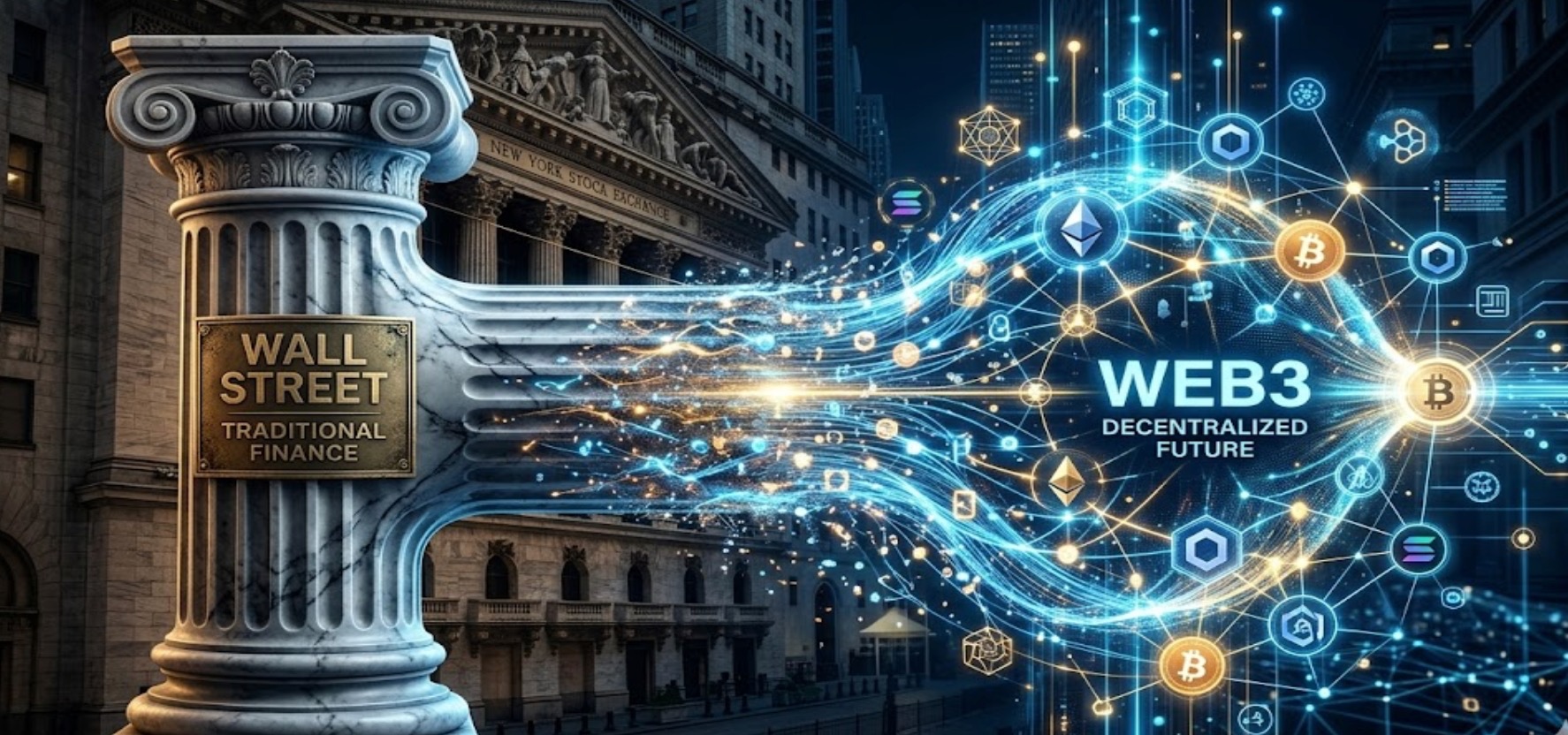
To understand this narrative shift, you have to look at who is writing the checks. This is no longer a game played exclusively by crypto-native venture capitalists. This is traditional finance (Old Money) laying down the tracks for future infrastructure.
Two massive deals in March fundamentally rewired the sector’s valuation models:
-
Kalshi’s Compliance Moat: Kalshi, strictly regulated by the U.S. Commodity Futures Trading Commission (CFTC), secured $1 billion in a new funding round led by Coatue Management. This massive injection catapulted its valuation to an astonishing $22 billion.
-
Polymarket’s TradFi Marriage: The Intercontinental Exchange (ICE)—the parent company of the New York Stock Exchange (NYSE)—injected an additional $600 million into Polymarket, a Web3 prediction giant that hasn't even issued a token. This brings ICE's total exposure to Polymarket to $1.64 billion.
Why are the owners of the NYSE and top-tier hedge funds suddenly obsessed with "crypto betting"? Because they aren't looking at a casino. They are looking at the foundational layer of next-generation "Information Finance."
Abandoning "Useless Tokens" for Real Yield
The previous cycles of Web3 applications were trapped in a death spiral: launch a project -> issue a governance token -> subsidize liquidity -> users dump the token -> protocol dies. The market is entirely exhausted by "governance tokens" backed by zero actual revenue.
Institutional capital is pivoting to prediction markets because they have cracked the code on a real business model. Prediction markets break the curse of the useless token. They generate verifiable Real Yield through order book fees, matching algorithms, and market-making spreads. Users aren't here to yield farm; they are paying cold, hard cash to "price information" and hedge real-world risk.
When platforms like Bloomberg and Reuters begin citing Polymarket's event probabilities as leading macroeconomic indicators, prediction markets cease to be a closed crypto speculation loop. They graduate into mainstream global information infrastructure.
The Systemic Cracks: Duopolies and Liquidity Vacuums
While $1.6 billion in fresh capital validates the business model, this extreme concentration exposes the fragility of the sector.
First, the space is now an absolute duopoly. Early tail-end projects like Augur have been entirely marginalized. The liquidity black hole created by Polymarket and Kalshi is erasing sector diversity.
Second, the compliance paths are violently fractured. Kalshi is playing the slow, traditional CFTC regulatory game. Polymarket, relying on offshore entities and crypto-native assets (USDC), is operating under the constant shadow of the U.S. Department of Justice. Investors funding both are simply hedging their regulatory bets, which ultimately delays the establishment of a unified industry standard.
The most critical threat, however, is the post-event liquidity vacuum. Prediction markets are inherently pulse-driven. Whether it’s a Presidential election or the Super Bowl, once the event settles, open interest goes to zero. To justify these astronomical valuations, Polymarket and Kalshi must frantically expand into non-political macroeconomic markets (e.g., CPI data, Fed rate cuts) and pop culture events in the latter half of 2026 to prevent user churn.
The Bottom Line
Evolving from a casino for speculative token issuance into a financial instrument that accurately prices global information and probability—this is the mandatory growing pain of a maturing crypto market.
That $1.6 billion didn't just buy out the top tier of prediction markets; it officially declared the death of pure hype narratives. For secondary market traders, following the capital flow is paramount. When top-tier capital stops buying infrastructure promises and pivots to cash-flowing application layers, your trading system and asset selection logic must evolve with it.
Register your Tapbit account today to access deep, institutional-grade liquidity and align your trading rhythm with the smartest capital in the world.
Frequently Asked Questions (FAQ)
Did Kalshi and Polymarket raise this $1.6 billion through token sales?
No. Both of these massive rounds were traditional equity funding. The $600 million from ICE into Polymarket and the $1 billion from Coatue into Kalshi were equity investments based on company valuations and future fee-generated cash flow. Neither platform has issued an official governance token as of this funding round.
What is the actual revenue model for prediction markets?
Unlike traditional gambling platforms that rely on a "house edge," prediction markets operate like futures exchanges. They generate revenue purely by matching trades, collecting order book fees (typically ranging from 0.5% to 2%), and profiting from market-making spreads. They facilitate the market rather than betting against the users.
Why are traditional quantitative hedge funds suddenly interested in prediction markets?
Traditional quant funds typically rely on expensive polling and delayed expert forecasts. Highly liquid prediction markets provide a real-time, financially-backed "probability gauge." For example, the outcome of a "Non-Farm Payroll" or "Fed Interest Rate" contract on Kalshi often prices in market consensus faster and more accurately than traditional analysts, providing hedge funds with a highly valuable, forward-looking data source.


