
If you’re looking at XRP as a trading asset or a long-term position, one of the first things to understand is its supply.
Unlike many cryptocurrencies, XRP has a fixed total supply of 100 billion tokens, all created when the XRP Ledger launched in 2012. No new XRP can be mined or issued beyond that cap.
Today, more than 59 billion XRP are in circulation, while the rest is largely held in escrow or controlled by Ripple.
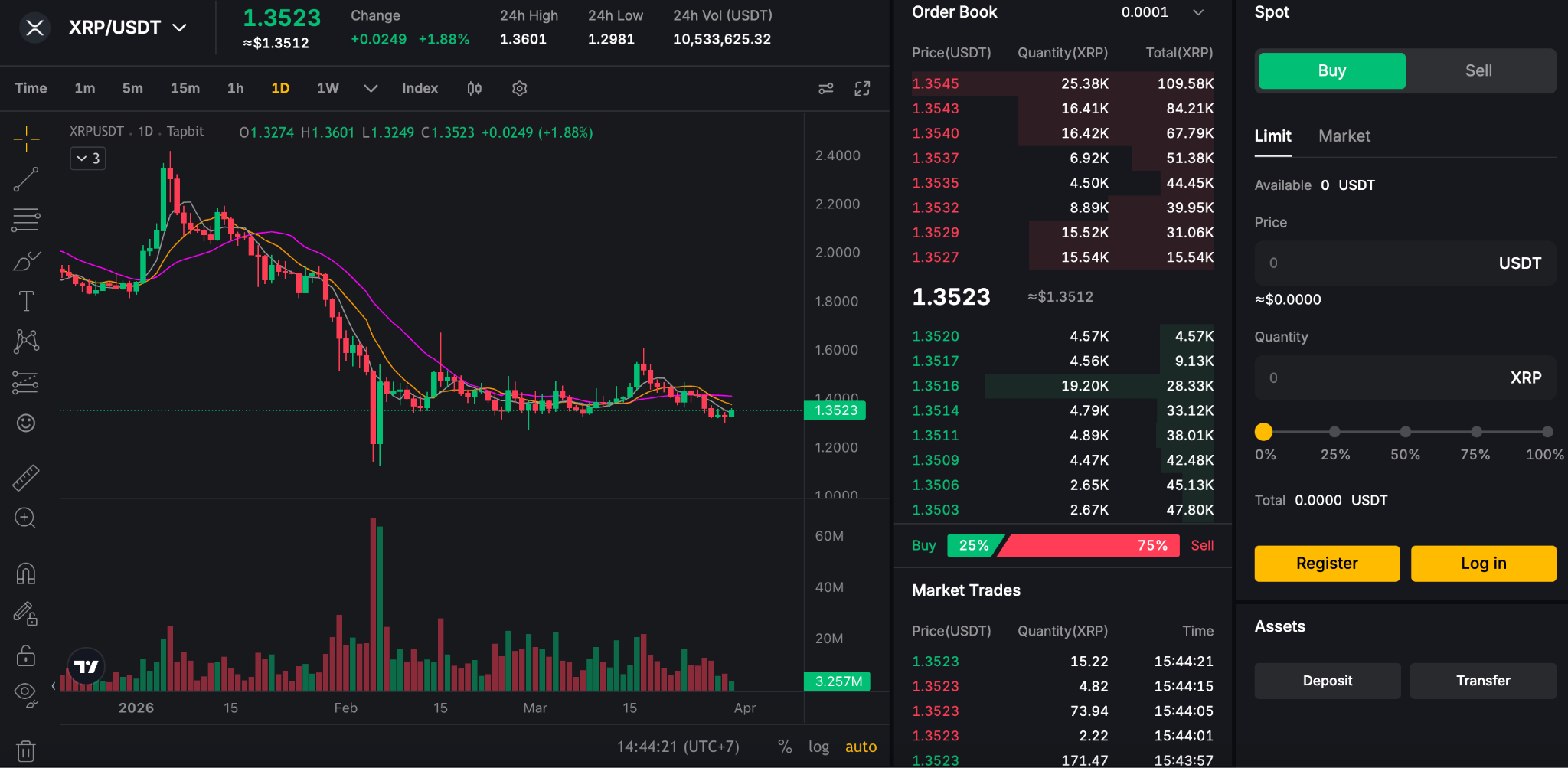
That structure matters. It affects liquidity, potential sell pressure, and how the market reacts to supply changes over time. If you plan to trade XRP actively, tracking both supply and market conditions—such as the XRP/USDT trading—can give you a clearer picture of real demand.
Before you dive deeper into the supply details, make sure you also understand how exchanges manage asset security and proof of reserves, since this is where you will actually hold and trade your XRP.
How Many XRP Tokens Exist?
The total supply of XRP is fixed at 100 billion tokens — a number hard-coded into the XRP Ledger at launch and unchanged since. All 100 billion were created at genesis. No new XRP is mined, and no validators or network participants earn newly issued tokens through block production.
That design makes XRP's supply universe fully known from day one. The only forces that change the total over time are Ripple's distribution decisions and the gradual removal of tokens through transaction fee burns — small in absolute terms, but structurally deflationary over a long enough horizon. You can verify the current on-chain figures directly through the XRP Ledger Explorer.
How Much XRP Is Actually in Circulation?
Circulating supply — the XRP available for trading, transfers, and active use — currently stands at more than 59 billion tokens. According to CoinMarketCap, the remainder sits in escrow accounts or Ripple's operational wallets, releasing on a controlled schedule rather than flooding the market at once.
For traders, the practical implication is straightforward: XRP's circulating supply grows in a predictable, transparent way. There are no surprise issuances, no inflation events tied to miner incentives, and no ambiguity about how much new supply is entering the market at any given time. Escrow release schedules are public, which means anyone can model the supply trajectory without relying on a company's word for it.
Where Did All the XRP Go? Full Supply Breakdown
When you add up the full 100 billion XRP supply, it breaks into a few main categories: escrowed XRP, direct Ripple holdings, XRP circulating in the market, and a small portion that has already been destroyed or lost.
XRP in Escrow Contracts
A large block of XRP has been locked in cryptographic escrow since 2017. These escrow agreements release a fixed amount of XRP each month, typically 1 billion tokens at a time. The goal is to provide a predictable supply schedule rather than sudden, large releases into the market.
Ripple generally uses part of each monthly unlock to support partnerships, liquidity programs, and institutional use. Any unused XRP is re‑locked into new escrow contracts with updated release dates. Public ledger data suggests that tens of billions of XRP remain in escrow, forming a visible and trackable pipeline of future supply.
Ripple’s Direct Holdings
In addition to escrow, Ripple holds XRP directly in corporate wallets. These holdings support operations, ecosystem investment, and liquidity for payment partners who use XRP for cross‑border transfers or settlement. Ripple periodically sells or distributes some of these tokens, often through over‑the‑counter arrangements rather than open‑market dumps.
The company publishes regular market reports outlining how much XRP was released, sold, or re‑locked, which allows analysts and traders to follow shifts in large‑scale holdings and potential sell pressure.
Burned and Lost XRP
Every transaction on the XRP Ledger carries a small fee that is destroyed rather than paid to validators. The base fee is tiny, often just a fraction of one XRP, but over millions of transactions it adds up to a modest permanent reduction in supply.
On top of that, some XRP is almost certainly lost forever due to forgotten keys, abandoned wallets, or operational mistakes. While there is no precise way to measure lost coins, both burned fees and lost keys mean that the effective supply is slightly lower than the theoretical 100 billion cap, and will decline very slowly over time.
How Many XRP Holders Are There?
The XRP Ledger contains a large and constantly changing number of active accounts. Each account holding XRP represents either an individual user, an institution, or a custodial service such as an exchange. On‑chain metrics show steady growth in the number of addresses with non‑zero XRP balances, indicating continued adoption across different user segments.
Because some wallets are custodial and represent many end users, the total number of individual XRP holders is higher than the raw address count. Even without an exact figure, the breadth of XRP distribution demonstrates that it is used well beyond a small group of insiders.
XRP Supply Compared With Other Major Cryptocurrencies
XRP’s supply model differs significantly from other large‑cap digital assets. Some networks enforce a low capped supply and release new coins via mining until that cap is reached. Others have no strict maximum, but manage inflation through staking rewards and fee burns.
XRP instead created all 100 billion tokens at launch and does not reward validators with newly issued coins. Security and consensus are handled without minting extra XRP. As a result, the only meaningful supply changes come from escrow releases, corporate distribution, and small fee burns, rather than perpetual inflation.
This design supports fast confirmation times and low transaction costs because the network does not need to pay block producers with inflationary rewards.
Does XRP’s Large Supply Limit Its Price?
A common misconception is that XRP’s large supply limits its price.
In reality, price is determined by market capitalization, not token count.
Even with 100 billion tokens, XRP can reach high valuations if demand is strong. The large supply actually supports:
-
deeper liquidity
-
easier large-scale transfers
For traders, demand matters more than raw supply size.
How XRP Tokens Are Burned Over Time
Burning in XRP’s case is built into the transaction fee model. Each transaction destroys a small amount of XRP, which cannot be recovered. The primary goal is to deter spam and denial‑of‑service attacks by making it costly to flood the network with empty transactions.
Even though the XRP Ledger has processed tens of millions of ledgers since launch, the total amount of XRP burned is still a very small fraction of the original 100 billion. This means XRP is technically deflationary but only very gradually. For traders, the burn mechanism is more about network health and long‑term supply discipline than short‑term price impact.
Where to Track XRP Supply Data
XRP’s supply is fully transparent.
You can monitor:
-
total supply
-
escrow balances
-
wallet activity
through blockchain explorers and market platforms.
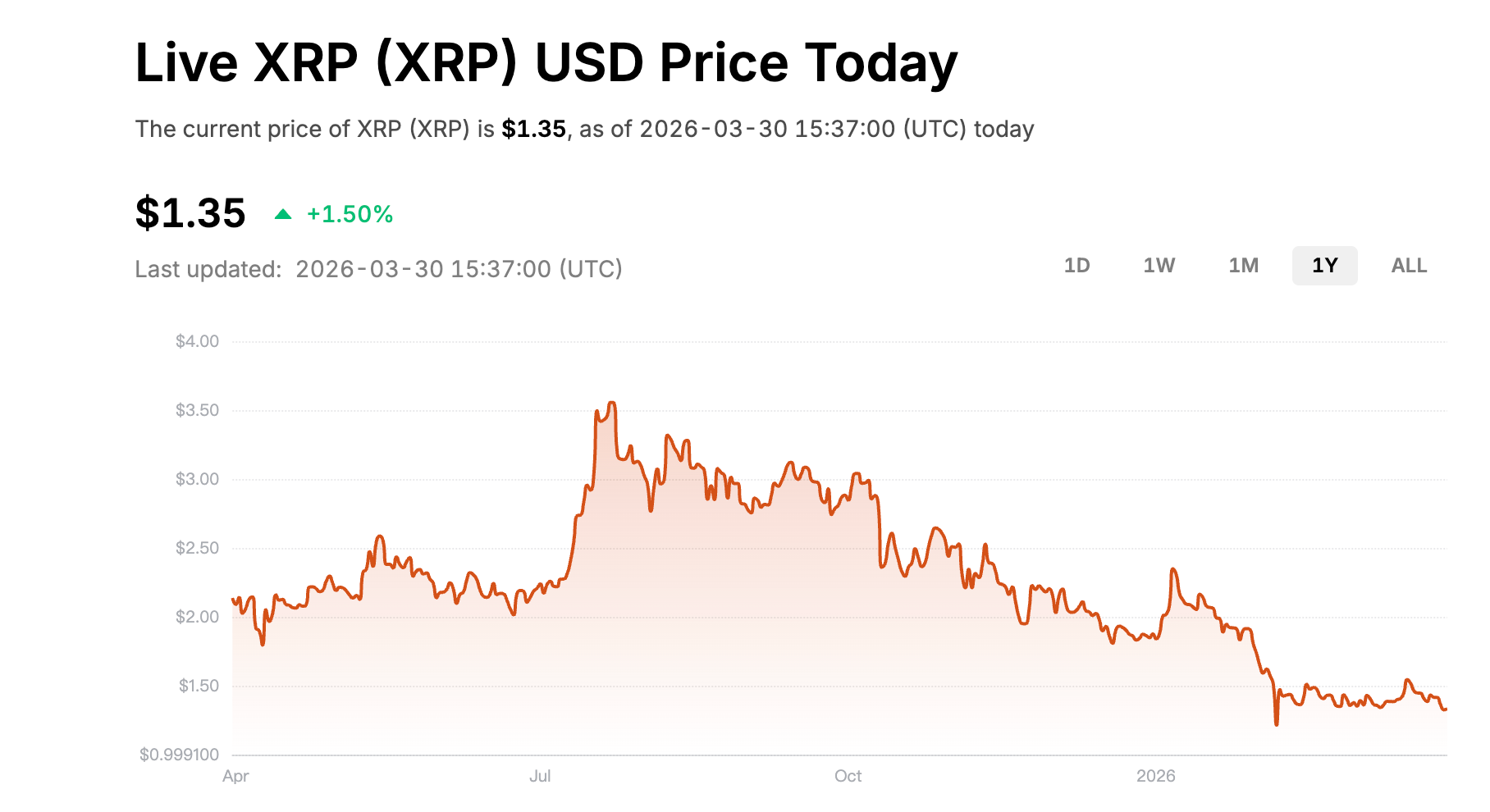
For trading-focused users, combining on-chain data with exchange data—such as XRP price trends and order book depth—gives a more complete view.
What XRP’s Supply Structure Means for Investors
For traders and holders, XRP’s fixed 100 billion supply, escrow schedule, and burn mechanism create a relatively predictable framework. You know that no new XRP can suddenly be issued beyond the original cap, and you can follow the planned escrow releases month by month. Transparency around corporate holdings and sales helps you gauge potential large‑scale supply events.
However, supply mechanics are only one side of the equation. XRP’s long‑term performance also depends on how widely it is used for payments, settlement, and liquidity, and how the broader digital asset market evolves. When you assess XRP, it makes sense to track both tokenomics and real‑world adoption indicators such as transaction volume and institutional partnerships.
Whatever your strategy, having a clear view of supply, costs, and platform conditions is essential. On Tapbit you can create an account, monitor XRP markets in real time, and trade alongside other major digital assets with a transparent pricing structure.
FAQ
How many XRP are there in total?
There are 100 billion XRP tokens in total. All of them were created when the XRP Ledger launched, and the protocol does not allow any additional XRP to be issued.
How many XRP are in circulation right now?
Industry data indicates that more than 59 billion XRP are currently in circulation, with the remainder mainly locked in escrow or held by Ripple. This figure changes gradually as new XRP is released or burned.
Will more XRP ever be created?
No. The XRP Ledger protocol fixes the maximum supply at 100 billion tokens. Changes in supply only come from distribution, escrow releases, burns, and lost coins, not from new issuance.
Does XRP get burned with every transaction?
Yes, each XRP transaction pays a tiny fee that is permanently destroyed. This helps protect the network from spam and makes XRP slowly deflationary over long timeframes.
Where can I verify XRP supply data?
You can use official XRP Ledger explorers, project documentation, analytics dashboards, and Ripple’s market reports to track total supply, escrow balances, and distribution. Combining multiple sources helps you cross‑check the numbers.
To start putting your XRP knowledge into practice, you can begin your journey on Tapbit today, explore spot and derivatives markets, and take advantage of ongoing welcome rewards designed for active traders.


