For the past five years, the crypto market operated under one sacred assumption: Ethereum L1 would become just an expensive, slow settlement layer, while all the action—and all the value—would live on L2s.
That narrative died in Q1 2026. Ethereum’s scaling roadmap has reached a structural inflection point, triggered by plunging L1 transaction costs, lagging L2 security developments, and a highly publicized strategic pivot from Ethereum co-founder Vitalik Buterin.
The result? L2 governance tokens are getting repriced in real-time—and not in a good way. Capital is consolidating fast. Here’s what the on-chain data actually looks like when the “rollup-centric” roadmap hits a dead end.
The Evaporation of the L2 Economic Moat
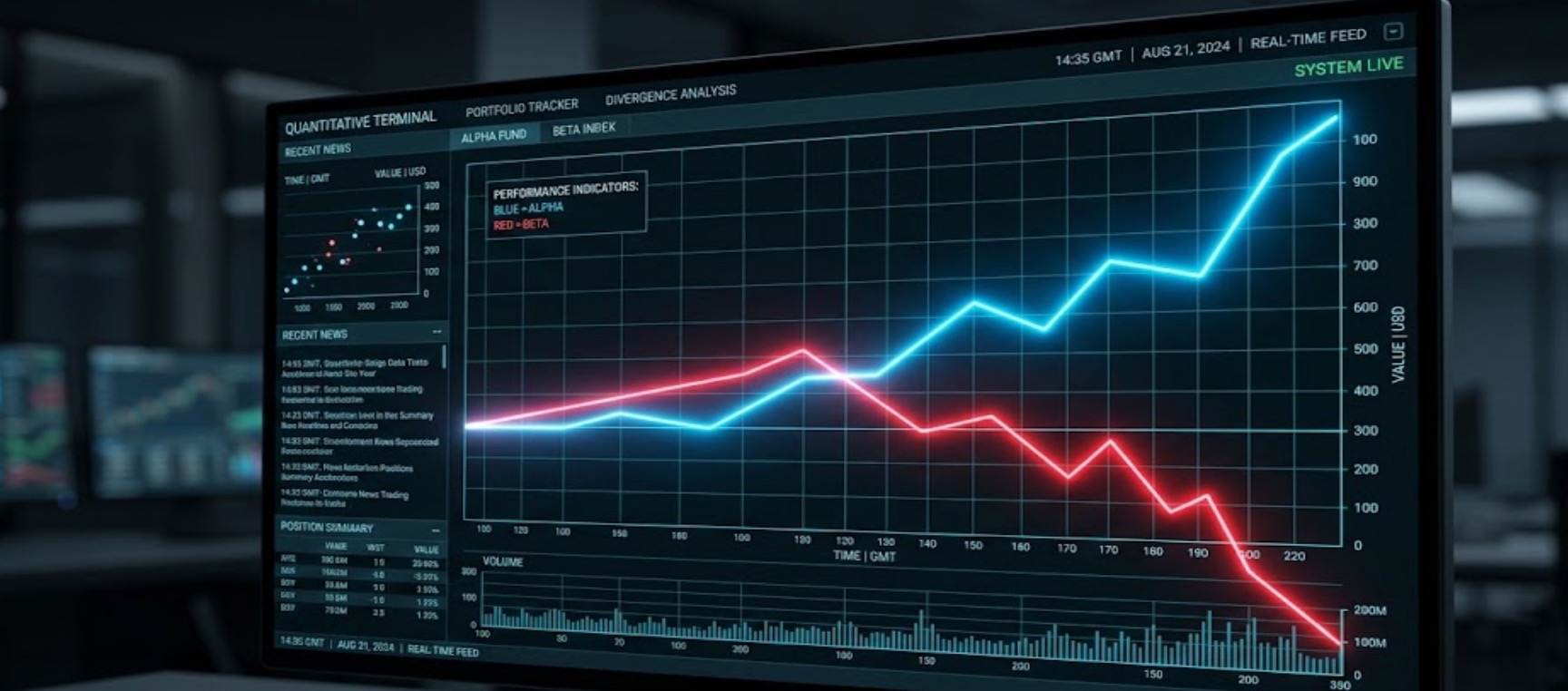
The primary utility of an L2 network relies entirely on fee arbitrage: offering cheaper execution than the mainnet. That margin is currently collapsing.
Following the progressive implementation of Ethereum's recent network upgrades—specifically the Fusaka upgrade introducing PeerDAS and expanding blob target capacity to 14—L1 transaction throughput has drastically increased. Consequently, L1 gas fees have compressed to historic lows.
When base layer fees drop to pennies, the incentive to bridge assets to a secondary network disappears. Recent on-chain data aggregated by Token Terminal illustrates a violent reversal in user behavior. Monthly active addresses on Ethereum Layer 2 networks plummeted from roughly 58.4 million in mid-2025 to approximately 30 million by February 2026. Concurrently, active addresses on the Ethereum mainnet doubled from 7 million to 15 million.
The economic fallout for L2 operators is severe. Without the high transaction volume required to sustain operations, total industry-wide L2 revenue plunged 53% year-over-year in 2025 to approximately $129 million. Because leading L2 tokens (like ARB and OP) function strictly as governance assets with no native yield or burn mechanics, this revenue compression directly undermines their fundamental valuation models.
The Security Reality Check
Economics aside, institutional capital is re-evaluating L2 exposure due to persistent security vulnerabilities.
The market historically priced L2 networks under the assumption that they fully inherited Ethereum's cryptographic security. This is objectively false for the vast majority of the ecosystem. According to the tracking dashboard L2BEAT, out of the top rollups commanding billions in Total Value Locked (TVL), only one has achieved "Stage 2" (fully trustless) status.
The rest remain stuck at Stage 0 or Stage 1. This means these networks operate via centralized sequencers and secure user funds through upgradable multisig smart contracts. Effectively, capital deployed on these L2s is not secured by Ethereum's decentralized consensus, but by the private keys of a handful of core developers.
Vitalik Buterin explicitly addressed this vulnerability earlier this year, declaring the original "rollup-centric" roadmap obsolete. By introducing the concept of a "Trust Spectrum" and advocating for native rollup precompiles, the Ethereum foundation is demanding that L2s either achieve genuine trustlessness or accept their status as highly centralized plugins.
Market Consolidation: The Liquidity Vacuum
The L2 sector is currently undergoing a brutal, winner-takes-all consolidation. The era of launching a generic rollup and commanding a billion-dollar Fully Diluted Valuation (FDV) is over.
Liquidity is aggressively polarizing. Base, Arbitrum, and Optimism now process nearly 90% of all L2 transactions. Smaller, long-tail rollups are experiencing a liquidity vacuum, with on-chain activity dropping by over 60% as projects shutter operations or pivot.
Moving forward, L2 networks face a binary choice. They must either deeply integrate with L1 (moving up to Stage 2 security) or pivot toward extreme specialization—building privacy VMs, gaming-specific infrastructure, or AI-agent payment rails that do not compete directly with general-purpose L1 execution.
Ultimately, this structural shift is heavily bullish for ETH as an asset. As the L2 sector fragments and consolidates, capital is rotating back to the base layer, reaffirming Ethereum mainnet as the ultimate, scarce verification engine for the digital economy.
Manage Your Market Exposure: The repricing of Layer 2 assets is generating significant volatility across the Ethereum ecosystem. Whether you are actively shorting overvalued governance tokens or accumulating spot ETH, Login to your Tapbit account to execute your portfolio rebalancing with deep liquidity and tight spreads.
Frequently Asked Questions (FAQ)
If Ethereum L1 is absorbing execution demand, what is the specific use case for remaining L2s?
General-purpose L2s are losing market share, but highly specialized L2s remain critical. Ethereum mainnet cannot natively support micro-transactions requiring sub-second finality (e.g., high-frequency trading networks or decentralized physical infrastructure networks [DePIN]). Surviving L2s will transition into application-specific environments tailored for distinct, non-financial data execution.
What exactly defines a "Stage 1" vs "Stage 2" rollup in risk assessment?
Risk assessment relies heavily on failure states. A Stage 1 rollup has operational fraud or validity proofs, but maintains a centralized "security council" (multisig) that can override the system in emergencies. A Stage 2 rollup is fully trustless; the smart contracts are immutable, and the cryptographic proofs operate entirely without human intervention. Institutional compliance frameworks increasingly require Stage 2 architecture to classify an asset as fully decentralized.
How does the collapse in L2 revenue impact their token prices?
L2 tokens currently trade at massive premiums based on future growth expectations. However, L2 tokens do not capture value; the centralized sequencers do. With sequencer profit margins compressing due to lower L1 DA costs and declining active users, the market is forcing a harsh repricing. Until these protocols implement decentralized sequencers that share revenue with token holders, their valuations remain highly vulnerable to downside pressure.


