

The Rise of Stablecoins in Global Finance
Stablecoins have transitioned from niche trading instruments into one of the fastest-growing segments in digital finance. Assets such as USDT and USDC are now widely used for:
-
Cross-border payments
-
On-chain settlement
-
DeFi liquidity
-
Remittances in emerging markets
Unlike volatile cryptocurrencies, stablecoins are pegged to fiat currencies, making them significantly more practical for real-world financial use.
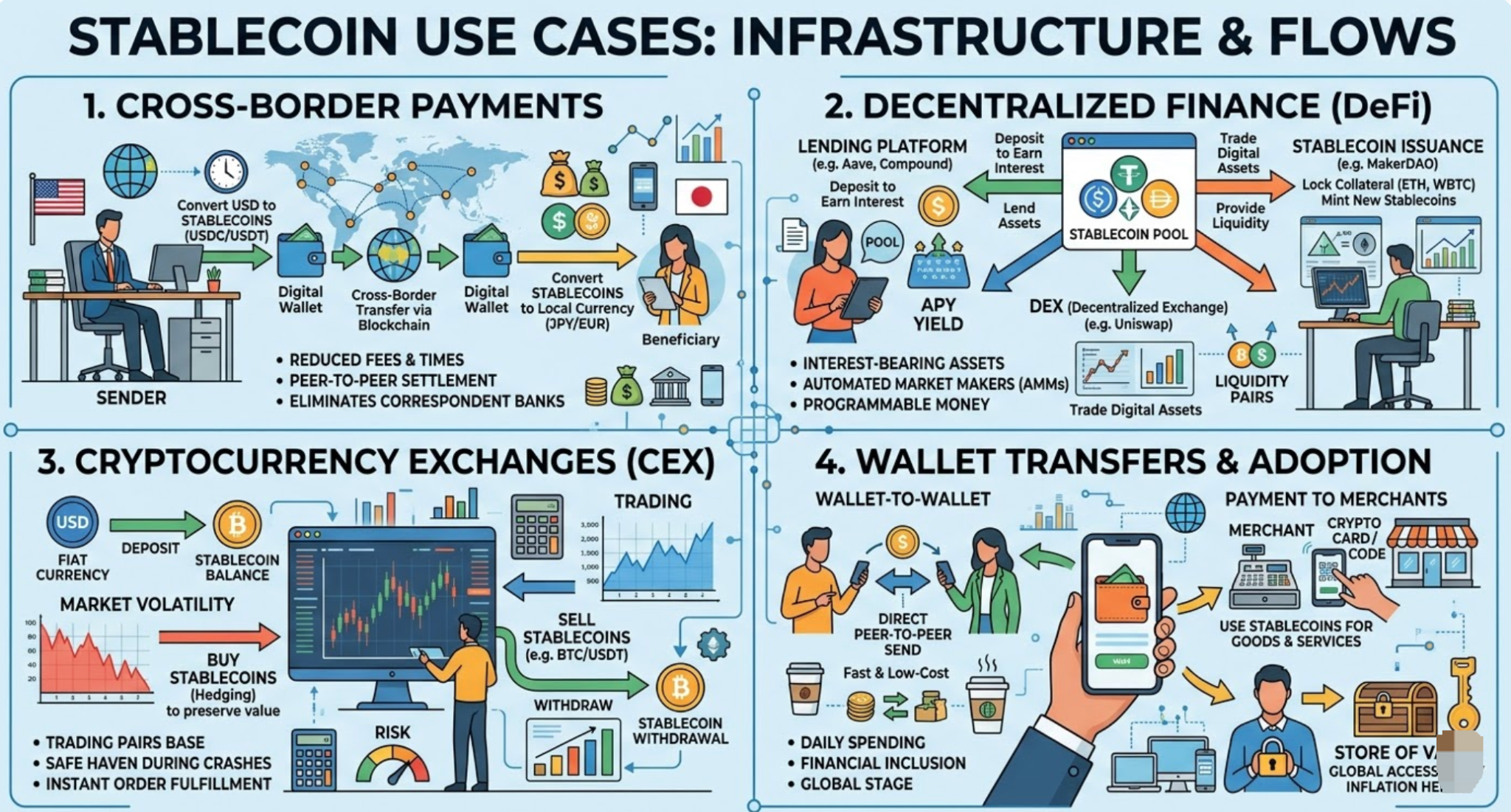
Market Growth: Stablecoin Adoption by the Numbers
The rapid expansion of the stablecoin market helps explain why traditional financial institutions are accelerating their involvement.
-
Total stablecoin market cap has surpassed $150B+ (source: TradingView)
-
Annual transaction volume has exceeded $10T, rivaling major payment networks
-
Tether continues to dominate global crypto liquidity
-
USD Coin is gaining traction in regulated and institutional markets
According to a recent report by Delphi Digital, stablecoins have now emerged as the most critical layer of crypto infrastructure in 2026. The report highlights several key developments:
-
Total stablecoin supply has grown 33% year-over-year, surpassing $304B
-
Adjusted monthly transaction volume has exceeded both Visa and PayPal
-
Stablecoin issuers collectively hold around $133B in U.S. Treasuries, ranking them as the 19th largest holder globally
Beyond the headline numbers, several structural trends are driving this growth:
-
Strong adoption in emerging markets, particularly for payments and remittances
-
Increasing institutional usage for settlement and liquidity management
-
Deeper integration into fintech platforms and payment infrastructure
Stablecoins are no longer just tools within the crypto ecosystem—they are increasingly becoming a foundational layer of modern financial infrastructure.
Why Traditional Finance Is Moving In
Major financial institutions are rapidly expanding their stablecoin capabilities. Companies like Visa, Mastercard, and Stripe are actively integrating blockchain-based payment solutions into their existing infrastructure.
The shift is driven by several clear advantages:
-
Faster settlement (minutes vs. days)
-
Lower transaction costs, especially for cross-border payments
-
24/7 global availability without reliance on banking hours
-
Smart contract programmability, enabling automated financial flows
Compared to traditional payment systems, stablecoins significantly reduce reliance on intermediaries and improve efficiency.
Traditional Payments vs Stablecoins
|
Feature |
Traditional Payment Systems |
Stablecoins |
|
Settlement Time |
1–3 business days |
Minutes |
|
Intermediaries |
Multiple (banks, clearing houses) |
Minimal |
|
Availability |
Limited (banking hours) |
24/7 |
|
Costs |
High (especially cross-border) |
Lower |
|
Transparency |
Limited |
On-chain, verifiable |
Stablecoins are not just an alternative—they represent a structural upgrade to legacy financial infrastructure, enabling faster, cheaper, and more programmable value transfer.
Stablecoins vs Competitors (PayPal & CBDCs)
Stablecoins vs PayPal
|
Feature |
Stablecoins |
PayPal |
|
Settlement |
Near-instant |
1–2 days |
|
Fees |
Lower |
Moderate |
|
Accessibility |
Global |
Account-based |
|
Transparency |
On-chain |
Closed |
Stablecoins vs CBDCs
|
Feature |
Stablecoins |
CBDCs |
|
Issuer |
Private |
Central bank |
|
Transparency |
Public |
Controlled |
|
Innovation |
Fast |
Slow |
|
Regulation |
Flexible |
Strict |
Stablecoins compete on openness and efficiency, while CBDCs focus on control and compliance.
Strategic Implications for the Financial System
Stablecoins are reshaping financial power structures:
-
Banks risk losing control over settlement
-
Payment networks face disruption
-
Fintechs gain global reach
-
Regulation becomes critical
Traditional finance is integrating stablecoins rather than competing against them.
What This Means for the Future of Crypto
The growing involvement of traditional finance signals a major shift: crypto is no longer operating in isolation.
Instead, we are entering a phase where:
-
Stablecoins act as the bridge between TradFi and crypto
-
Institutional adoption accelerates
-
Regulation becomes a key battleground
As this trend continues, stablecoins could become the backbone of global digital finance—blurring the line between crypto and traditional systems.
Trade Stablecoins Smarter with Tapbit
As stablecoins become a core part of the financial system, choosing the right platform matters.
Tapbit provides a seamless way to trade USDT, USDC, and other digital assets with:
-
Low fees and fast settlement
-
High liquidity across major pairs
-
Secure and intuitive trading experience
If you're actively trading or managing crypto assets, Tapbit offers the tools you need to stay efficient in a rapidly evolving market.
👉 Explore Tapbit and start trading smarter today.
FAQ
What are stablecoins used for?
Stablecoins are used for trading, payments, remittances, and settlement due to their stability.
Are stablecoins safer than cryptocurrencies?
They are less volatile but still depend on issuer credibility and regulation.
Why are banks interested in stablecoins?
To improve efficiency, reduce costs, and stay competitive.
Will stablecoins replace traditional payment systems?
They are more likely to complement and upgrade existing systems.
How do stablecoins compare to CBDCs?
Stablecoins are flexible and market-driven, while CBDCs are government-controlled.


